

Watsonia North Primary School
New Build - Senior School Building
A new Senior School Building for Watsonia North Primary School, designed around the way its students and teachers actually learn.
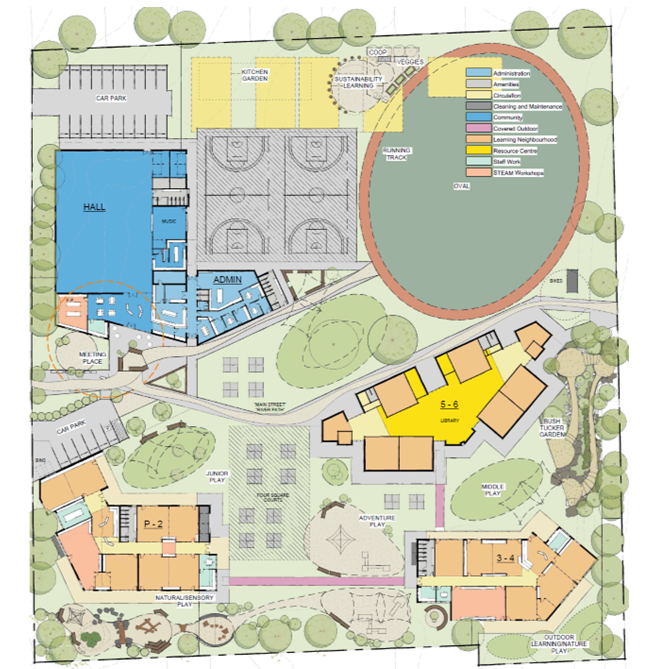
Developed through extensive consultation with the school community, the project brings together six paired general learning areas, small-group and informal learning spaces, a dedicated STEAM workshop, collaborative staff planning facilities and inclusive amenities within a calm, connected learning environment.
At its heart is a simple idea: good design starts with listening.
-
Watsonia North Primary School is a well-established government primary school in Melbourne's north-east, with strong intergenerational connections to its local community.
The school describes its students as confident, curious, respectful and engaged learners, with an educational model focused on inquiry, student agency, differentiated learning and collaboration. Its Learning to Learn framework encourages students to be curious, creative, reflective, responsible, resilient and collaborative learners.
The school's educational brief also recognised that teachers are learners. Collaborative planning, mentoring, coaching and peer observation were central to its preferred model of teaching and professional development.
Our role was to translate those aspirations into a physical environment that could support them.
-
The project began not with a predetermined building, but with listening.
Through the masterplanning and design process, we worked with school leadership, teachers, students, parents, School Council, the Victorian School Building Authority, consultants and Wurundjeri representatives to understand what the school valued, how it wanted to teach and what its existing environment was preventing it from doing.
Some of the most important design decisions came directly from those conversations.
Classrooms were paired to support team teaching and teacher mentoring. The STEAM workshop moved to the centre of the campus so learning could be visible and accessible. Small-group spaces were designed for intervention and extension without isolating students from their cohort. Staff were given a genuine collaborative planning environment. Inclusive amenities were developed around privacy and choice.
And when the school told us how much they valued an existing gum tree, the building moved around it.
That tree ultimately became part of a much larger story about place, materiality and belonging — influencing the building's form, colour palette, tactile surfaces and the symbolic tree at the centre of the new learning environment.
The finished building is therefore less the result of a singular architectural gesture than hundreds of decisions shaped by one approach:
Listen first. Design second.
-
Location
Watsonia North, Melbourne
Wurundjeri Woi Wurrung Country
Banyule City CouncilClient
Watsonia North Primary School
Victorian School Building AuthorityProject
New Senior School Building
Consultants
Bridge Building Surveyors
Spencer Group Engineering
Cortese Consultants
Renzo Tonin & Associates
GreenRate
All Spatial Land Surveyors
Ochre Landscape
Designed in conjunction with Reduct Architecture.Builder
GRN BuiltKey Suppliers
Autex Australia
Weathertex
Woods Furniture
Learning environments
Six paired general learning areas, small-group learning, informal and quiet learning settings, STEAM workshop, collaborative staff planning, presentation and gathering space, inclusive amenities and connected outdoor learning areas.Design approach
Flexible learning without defaulting to open plan; regulation over overstimulation; staff and student wellbeing; inclusive choice; connection to Country and existing campus character; durable, purposeful materials; and disciplined use of a public-school budget.
Completed
2025
Featured by:
Designing for how learning actually happens
Flexibility doesn't have to mean one enormous open-plan classroom.
At Watsonia North, it means providing enough different settings for teachers and students to choose the one that suits what they're doing.
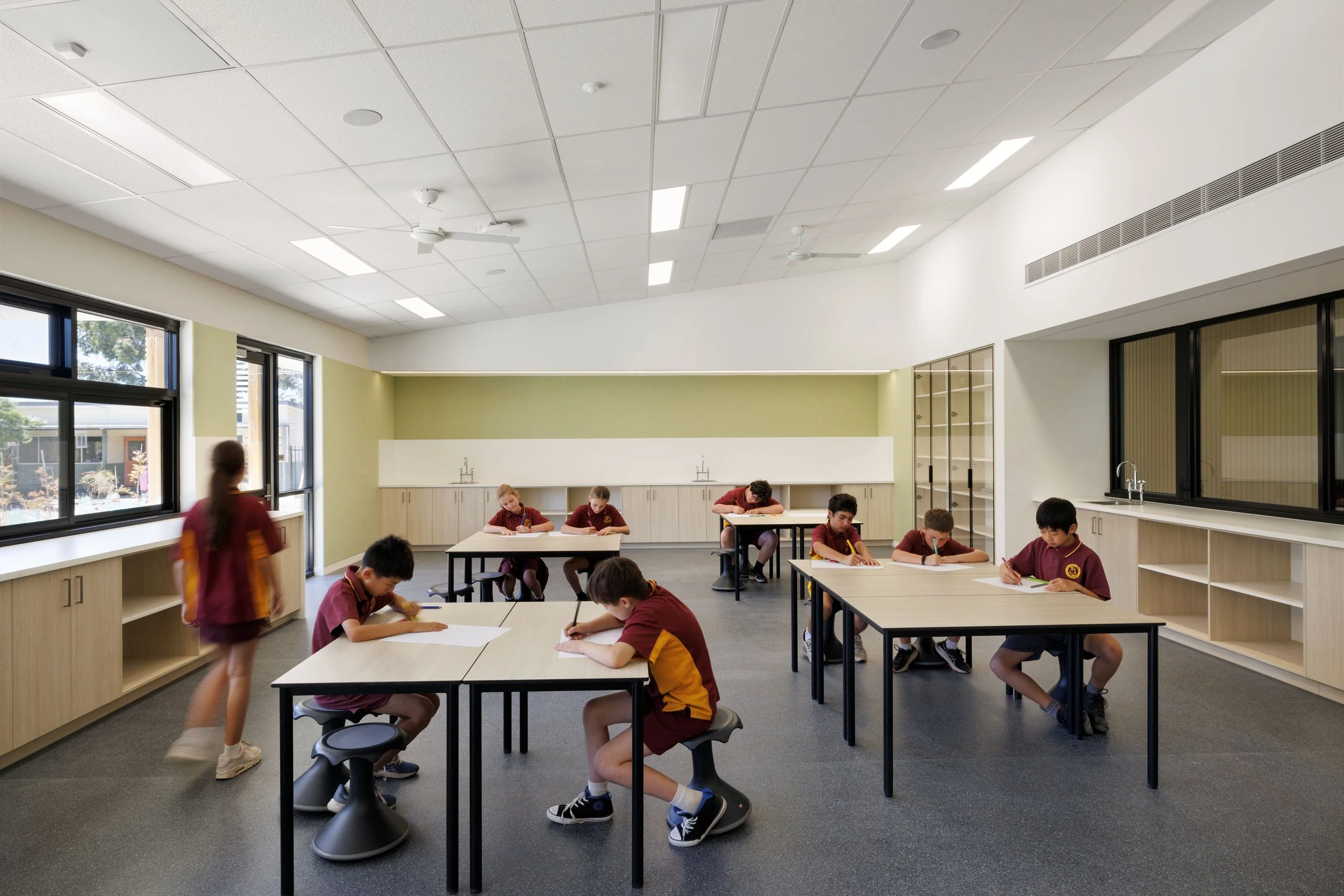
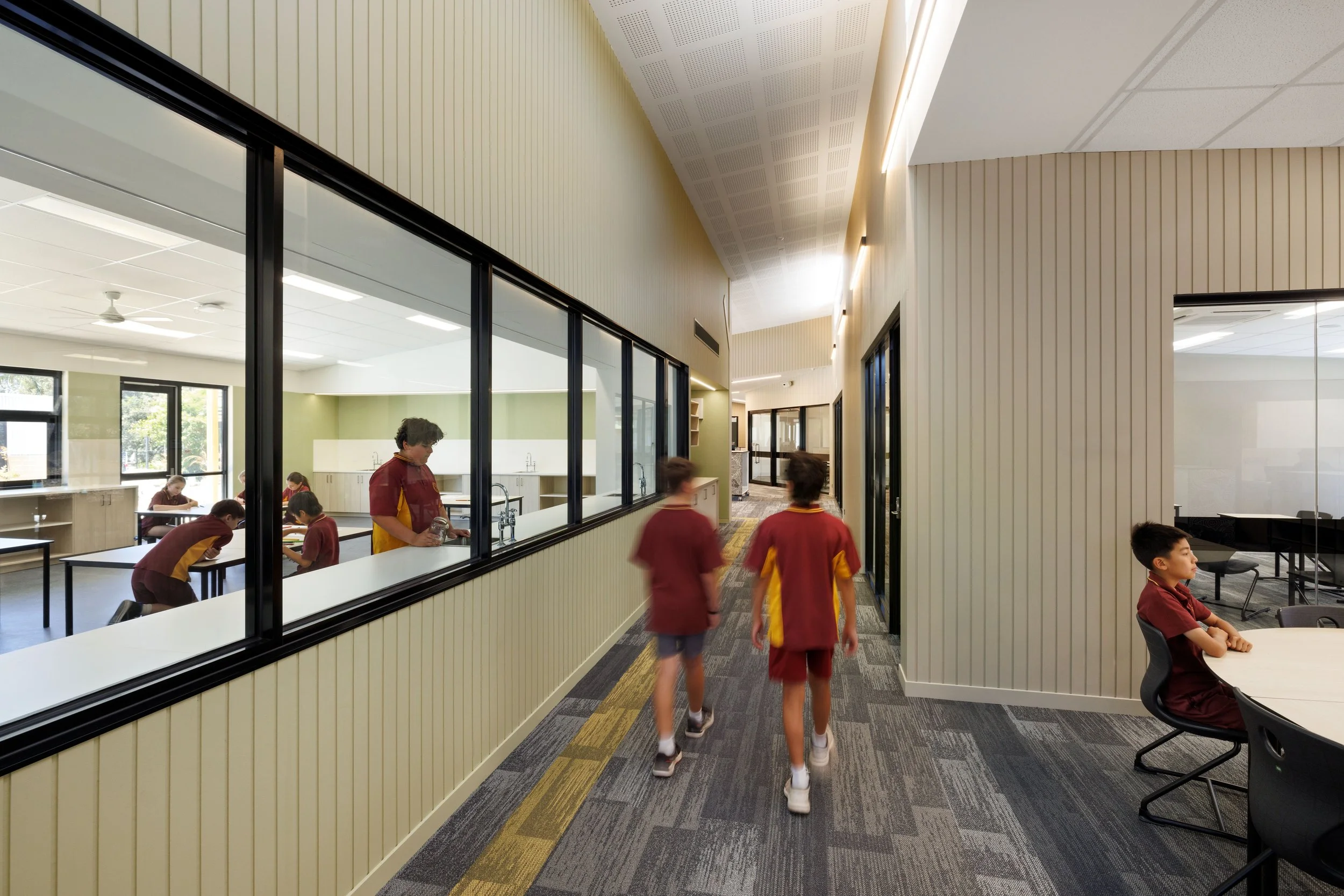
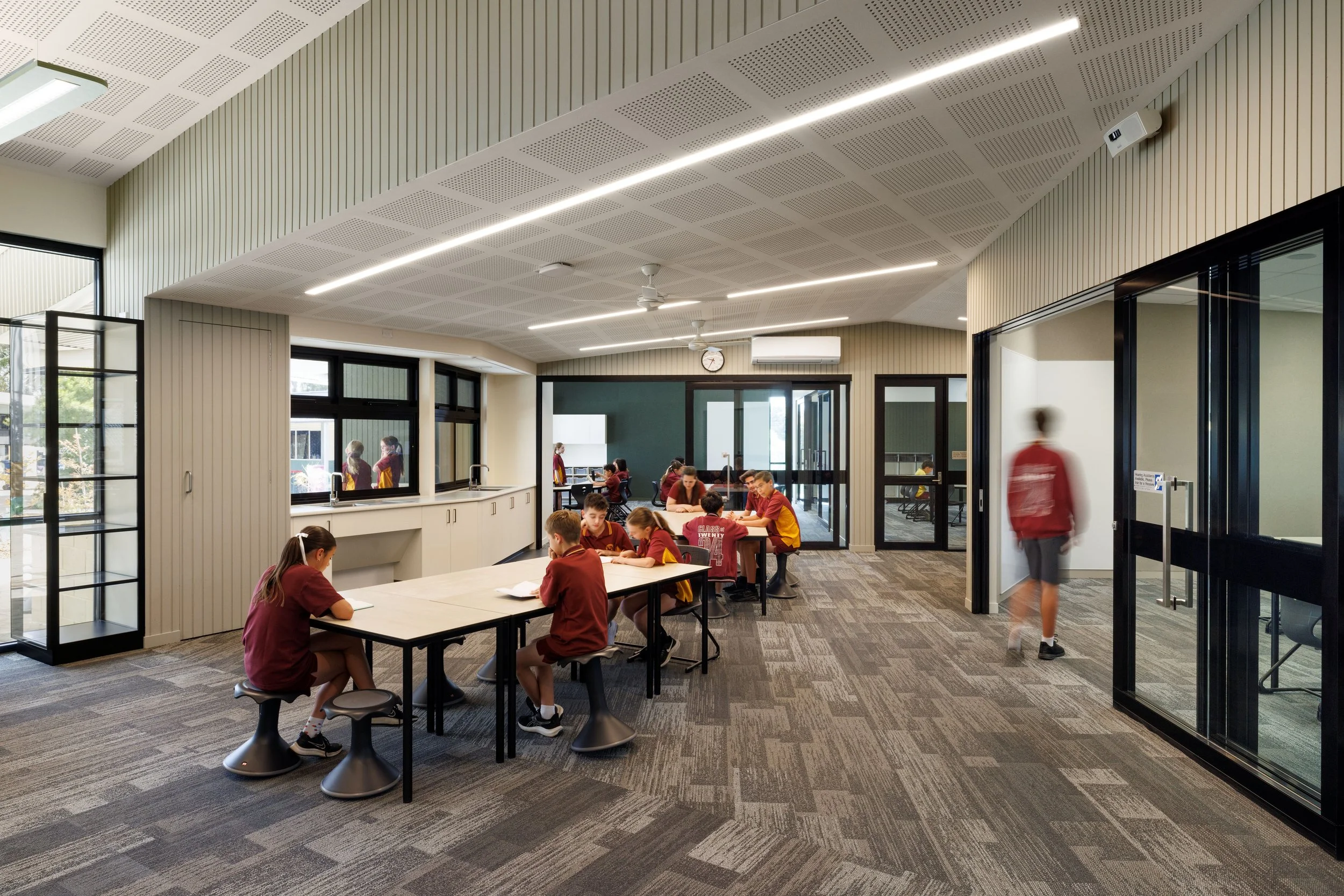
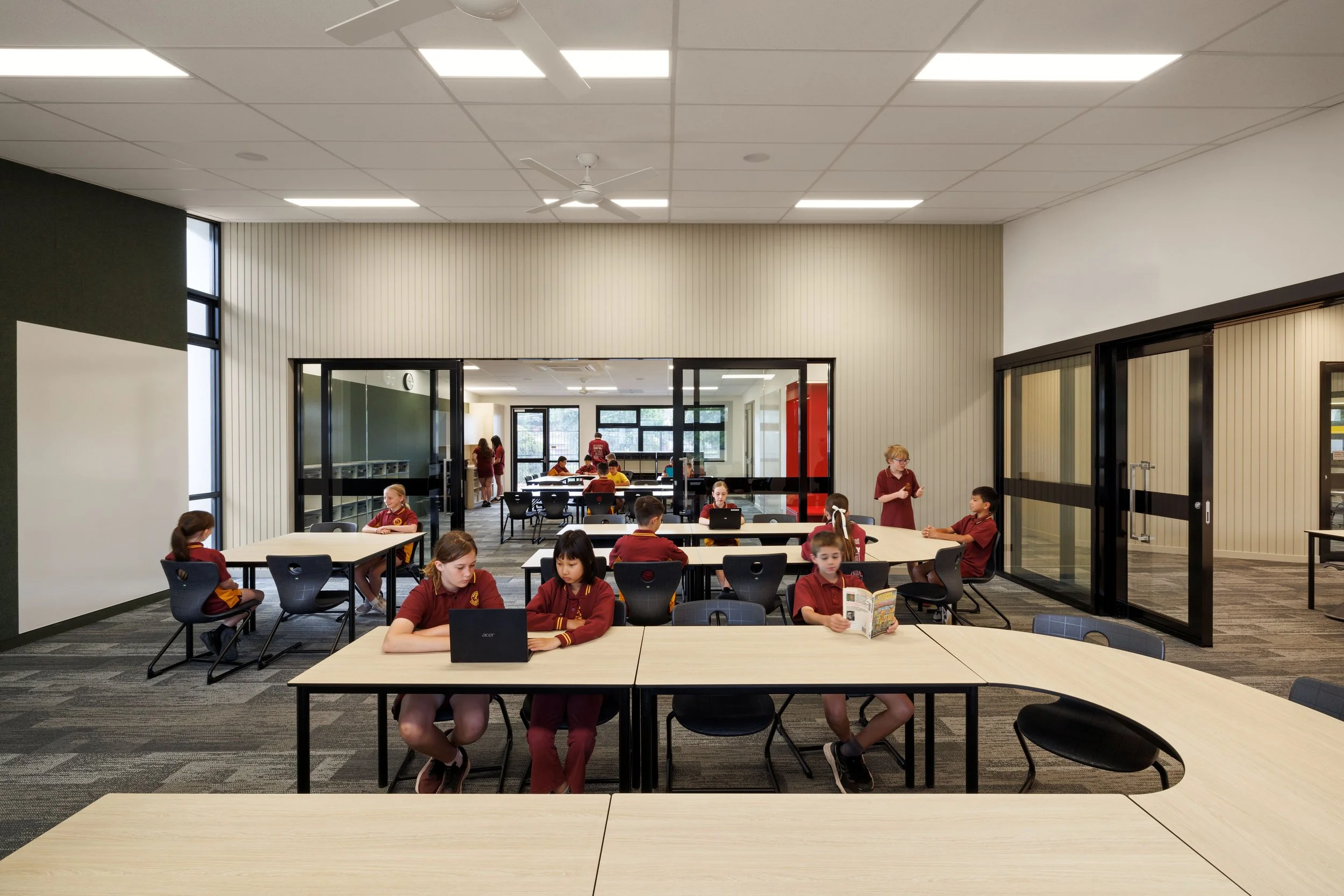
Each of the six general learning areas is paired with another classroom. Connecting doors allow two teachers to team teach, or each classroom can operate independently. Explicit instruction can happen in one setting while another teacher works with smaller needs-based groups.
The arrangement also supports teachers as learners.
Graduate teachers can work alongside experienced mentors, allowing professional learning to happen through formal observation as well as the everyday experience of seeing good teaching modelled next door.
Small-group spaces extend that flexibility further. Students receiving focused intervention can work with a teacher without being sent to an unsuitable leftover space elsewhere in the school. Students undertaking extension programs can work independently or online while remaining connected to — and passively supervised from — their learning environment.
The architecture supports different ways of learning without assuming there is one universally “flexible” space.

Designed with the school, not just for it
Hear from Principal Sarah Pollnitz about the consultation process, the school's approach to teaching and learning, and what the completed building means to the Watsonia North community.
STEAM learning where everyone can see it
Consultation doesn't mean much if it doesn't change anything.
The location of the STEAM workshop is one example where it did.
An earlier design placed the workshop further back in the building, with stronger connections to potential garden-based learning. Through consultation, school leadership identified another priority: STEAM should be front and centre.
So we moved it.
The workshop now opens directly onto the courtyard, making it readily accessible across year levels and allowing the activity inside to become visible to the wider school.
Making, experimenting and problem-solving aren't hidden in a specialist room at the back of the campus. They become part of everyday school life.
Even before the room was fully furnished, Sarah observed students working on the floor, completely engaged with what they were doing.
Sometimes the clearest evidence that a learning space works is that children don't wait for you to finish setting it up before they start using it.
Supporting bodies so minds can learn
We talk a lot about student wellbeing in school design.
We should talk about teacher wellbeing too.
Teachers spend their days caring for children, often putting their students' needs before their own. But supporting educators ultimately supports the students in their care.
Watsonia North therefore considers wellbeing at several scales.
A dedicated staff planning room provides a genuine professional workspace for collaborative planning, data review and shared resources. Teachers can leave working material set up rather than finding an available meeting room and packing everything away again.
Paired classrooms allow colleagues to support one another throughout the day as well as pedagogically.
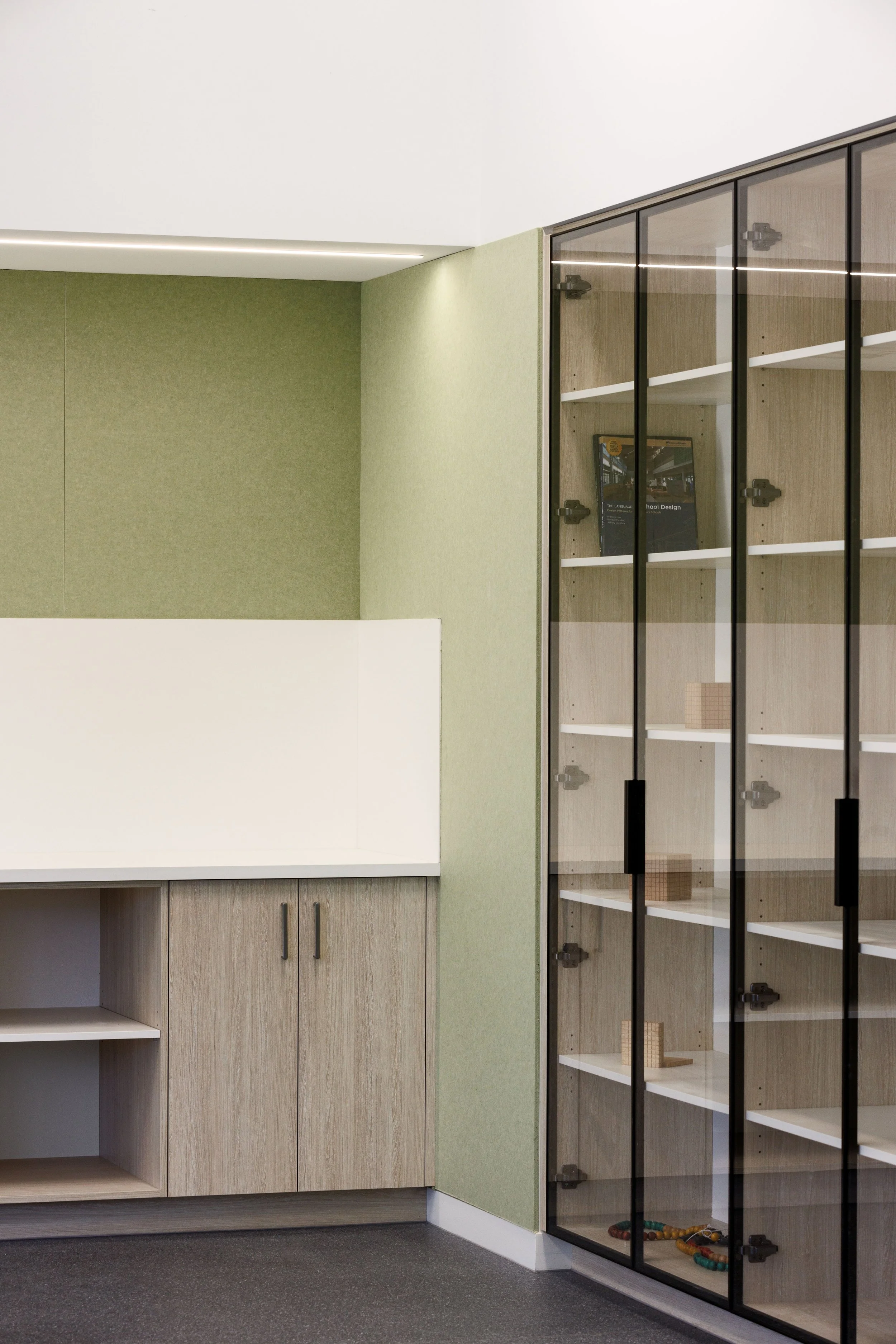
For students, pinboard-lined take-a-break nooks provide small places to retreat from the noise and stimulation of the classroom without requiring them to leave it altogether. Small-group rooms offer another degree of separation while maintaining passive supervision.
Acoustic treatment reduces the effort required to hear and be heard. Drinking water, storage and amenities are located where people need them.
These aren't glamorous architectural gestures.
They're the ordinary things that help bodies feel comfortable enough for minds to concentrate on learning.

A tree worth moving a building for
One of the school's strongest requests was deceptively simple:
Could we keep the tree?
A mature gum tree stood beside the proposed building site and had long formed part of the children's play environment. The school valued it enormously.
So rather than treating the tree as an obstacle, the building changed.
Its plan kinks around the existing canopy, preserving the tree and allowing it to remain part of the children's everyday experience.
The Manna Gum then became part of the design language inside.
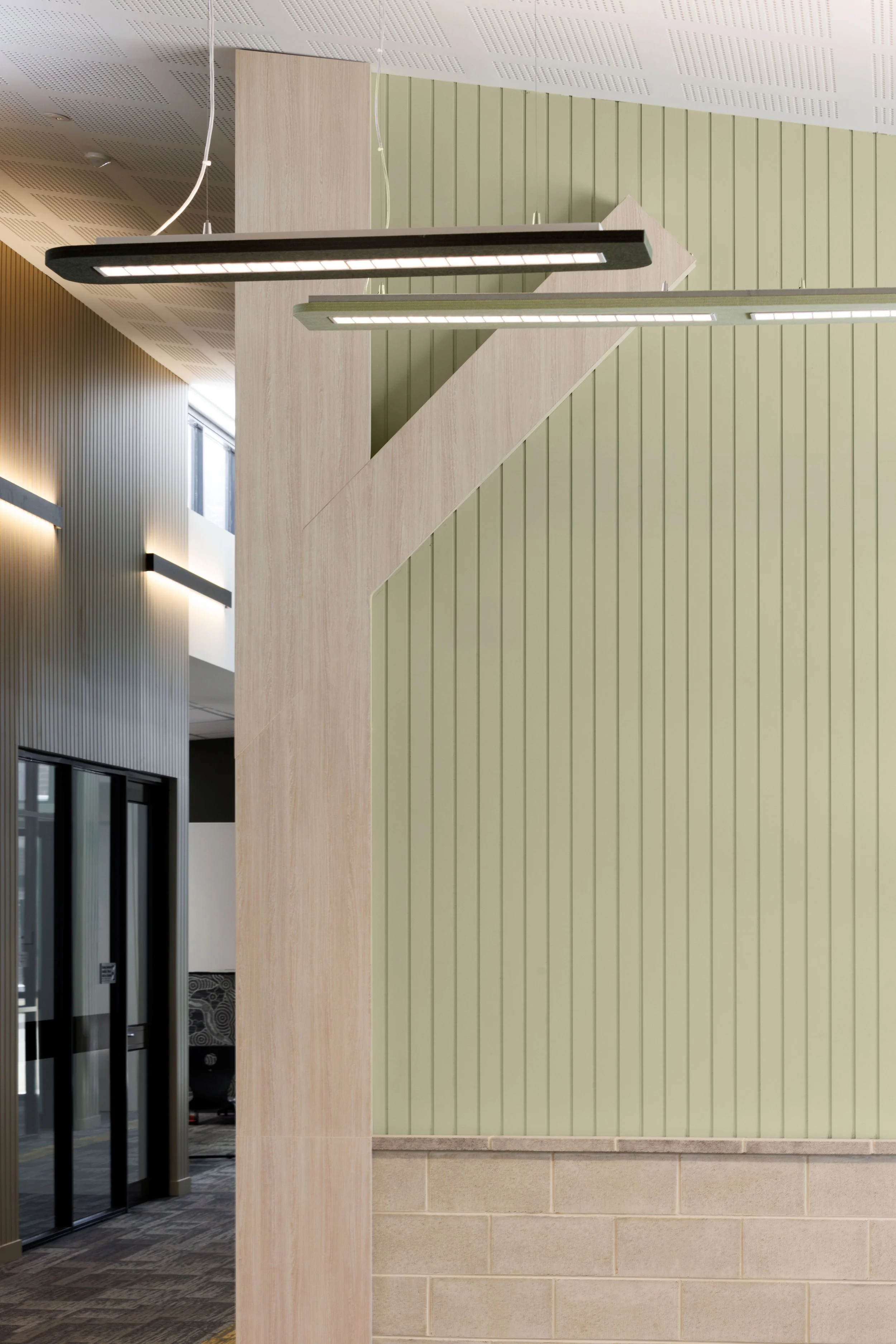
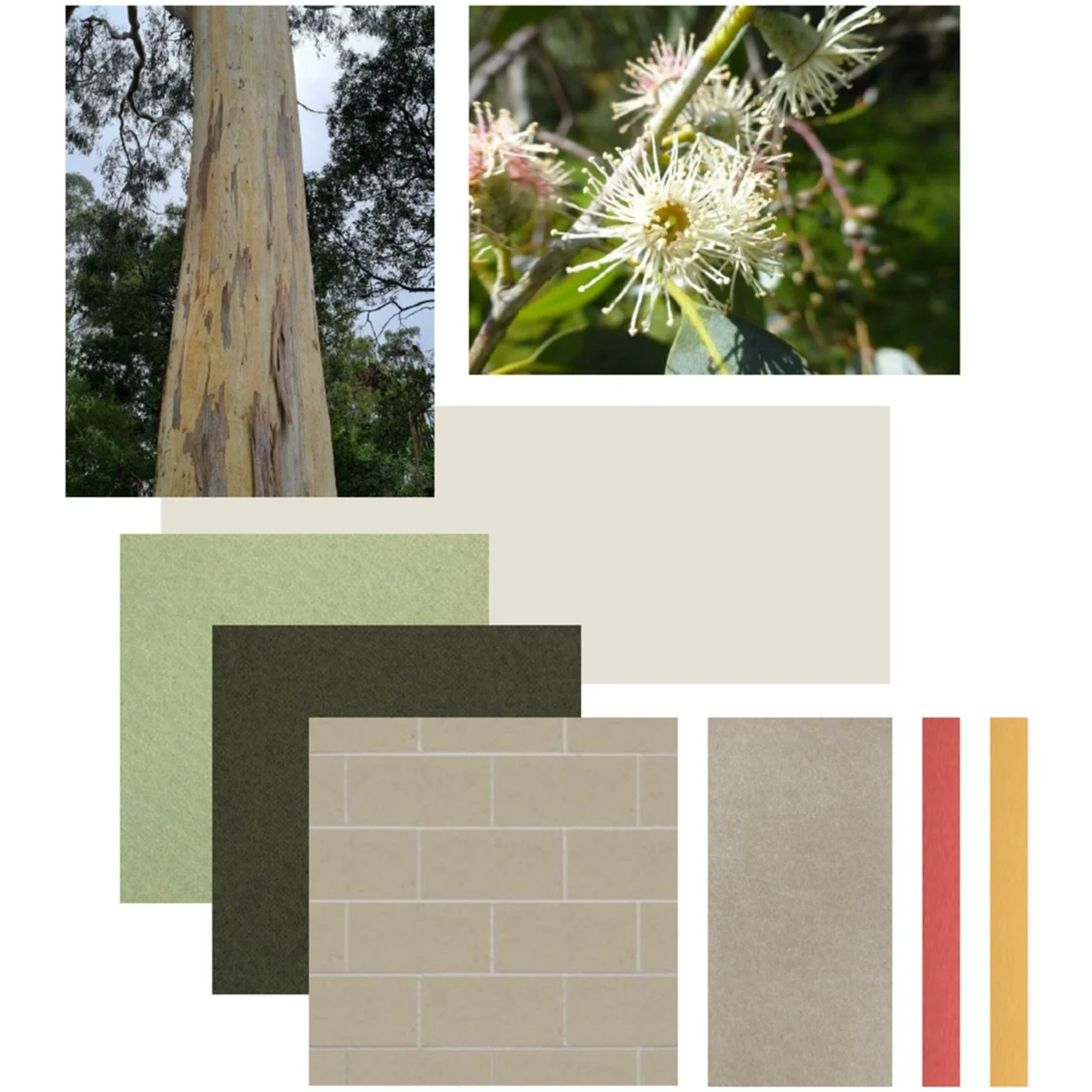
Greens, muted reds and warm neutrals were drawn from the colours of the tree and its fruit. Vertically grooved cladding creates a rhythm reminiscent of the trunks of a forest — the suggestion that the one tree being celebrated sits within a much larger landscape.
At the centre of the building, a symbolic tree rises through the main collaboration space. Above it, custom acoustic light fittings abstract the shape of leaves to create a canopy overhead.
The tree isn't reproduced literally.
Instead, its story appears at different scales throughout the building: in plan, colour, texture, light and landscape.
The Wurundjeri People take their name from their Woiwurrung language word ‘Wurun’ meaning the Manna Gum
Manna Gum (Eucalyptus viminalis) which is common along ‘Birrarung’ (Yarra River), and ‘djeri‘, the grub which is found in or near the tree.
We pay our respects to the Wurundjeri people and their elders - past, present and emerging.
“It’s a really special moment when children walk in and immediately connect with something that feels both calm and important. The Manna Gum is a beautiful way to honour the land we’re on.”
Sarah Pollnitz, Principal
Watsonia North Primary School
Making every element work harder
Public-school architecture comes with a simple responsibility: use resources carefully.
Our approach to value isn't to remove design until something fits the budget. It is to ask individual elements to do more.
The vertically grooved Weathertex used throughout Watsonia North is a good example.
We wanted its texture and vertical rhythm for sensory and conceptual reasons, but adding a purely decorative finish over a standard wall build-up would have been wasteful.
Working with the acoustic engineer, we developed a wall construction in which the impact-resistant cladding could replace a layer of plasterboard. The material therefore contributes durability, acoustic performance, tactile interest and architectural identity simultaneously.
Selected external areas use the same material and colours, allowing the material language to flow between inside and outside. Existing blockwork and light Colorbond tones reference neighbouring campus buildings, helping the new building feel like another chapter of the same school rather than an unrelated object.
The same principle runs through the planning.
The staff workspace supports professional collaboration and passive supervision. Paired classrooms support multiple pedagogies and teacher mentoring. Existing relocatables were repositioned for decanting during this project and future stages rather than unnecessarily removed.
The project was delivered within its available budget with only 43% of the contingency used.
Good design doesn't have to be expensive. It has to be purposeful.
Inclusion through choice
Inclusive design isn't about deciding what every person needs.
It's about providing choices.
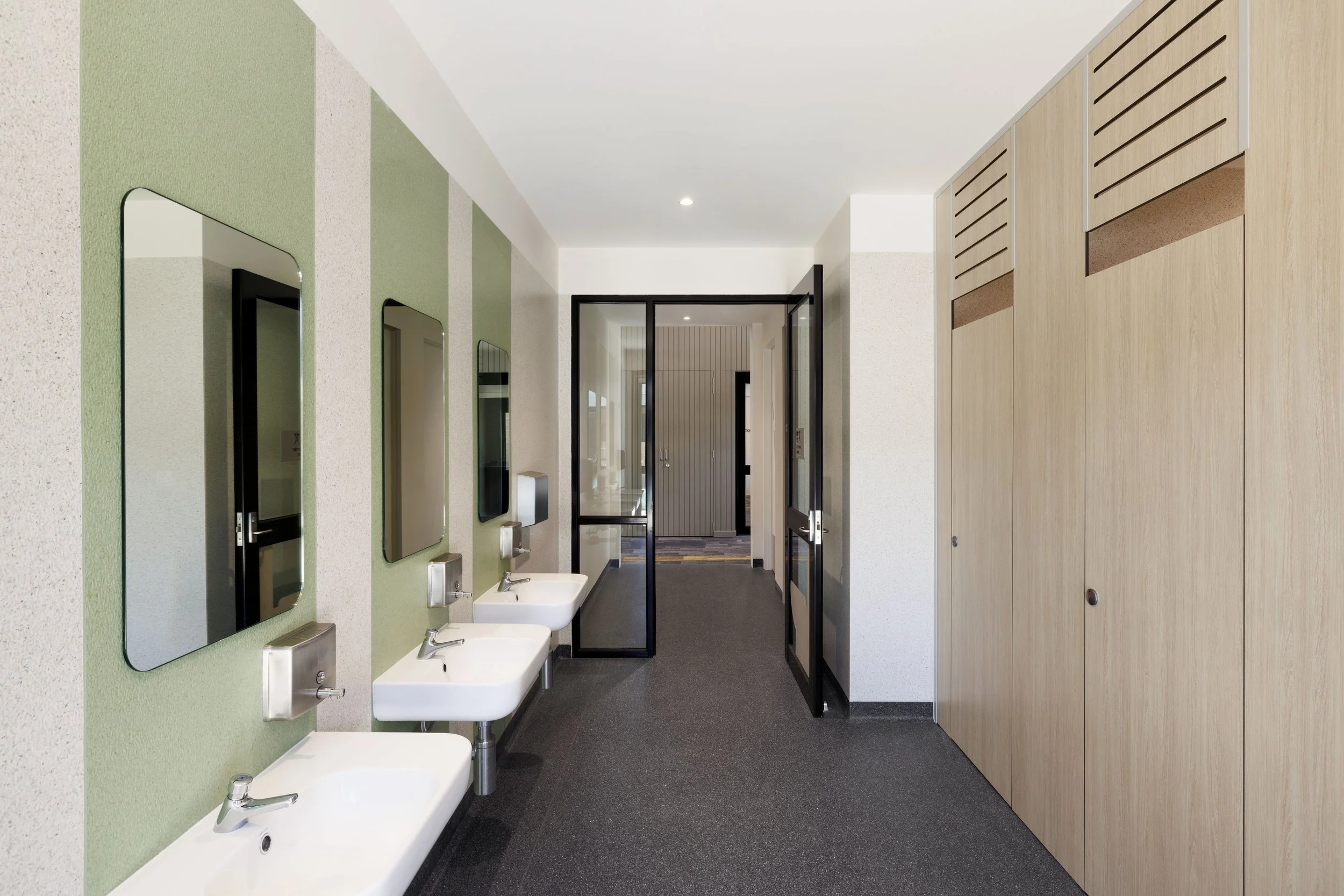
Watsonia North includes full-height gender-neutral toilet cubicles with shared handwashing facilities and dual access from inside the building and the outdoor play environment.
At the time the project was designed, delivering these amenities required a Performance Solution. We pursued it because the school had identified an important need: students should have an option where using the bathroom didn't require them to identify themselves in a way that made them uncomfortable.
Gender-neutral amenities aren't the only option. Accessible facilities are immediately available and gender-specific toilets remain elsewhere on campus.
The intention is not to prescribe which amenity a child should use.
It is to give them privacy, dignity and choice.
The same philosophy informs the learning spaces: different settings for intervention, extension, collaboration, concentration and regulation allow people to choose what they need without unnecessarily labelling or separating them.
Every child deserves to feel safe, welcome, proud and included.
Intent → Reality
Good documentation isn't about making the finished photograph look exactly like a render.
It's about protecting the ideas that mattered through design development, approvals, procurement and construction.
At Watsonia North, the details evolved. The intent remained.


“For us, it was really important that our teachers could teach collaboratively when needed, but also have the option to work independently.
Whisker Architecture helped us create those opportunities in every learning space.”
Sarah Pollnitz, Principal
Watsonia North Primary School


A building with a soul
Architecture is finished long before a school finishes making it its own.
That's exactly as it should be.
At handover, Sarah described watching students explore their new building: noticing the spaces, experimenting with them and immediately finding ways to use them.
She felt the children could recognise the thought and care that had gone into creating it.
“They can see that people have loved this building and thought about what's gone into it… it's got a soul already.”
Sarah Pollnitz, Principal,
Watsonia North Primary School
That's ultimately what we hoped to achieve.
Not architecture as an object imposed on a school.
A place that feels as though it belongs to the people who use it.
Listen first. Design second.