
How Good Design Removes Everyday Friction
Good residential design is not only about how a home looks. It is about whether the house supports the way people actually live.
I call the small, repeated frustrations that get in the way of everyday routines micro-frictions. They can be as minor as carrying scraps across the kitchen to reach the bin, or as significant as a living room that is dark and cold every winter. One irritation is manageable. A dozen of them, repeated every day, can make a home harder to live in than it needs to be.
There are countless examples, from the position of a handle to the planning of an entire house. This is where the value of design can be easy to miss. The best decisions often do not announce themselves. They simply make ordinary life work better.
Live [in] Your Values is not just a line on our website. It means designing a home around what matters to the people who will live there: their routines, relationships, priorities and plans for the future.
I believe that when a home supports the life we are trying to lead, it leaves us with more patience and energy for everything outside it. That is a belief shaped by my own experience and by years of listening to clients describe what is and is not working in their homes.
“When we change the spaces we spend time in, that can transform the energy we bring to the activities we do.
- Simon Ong”
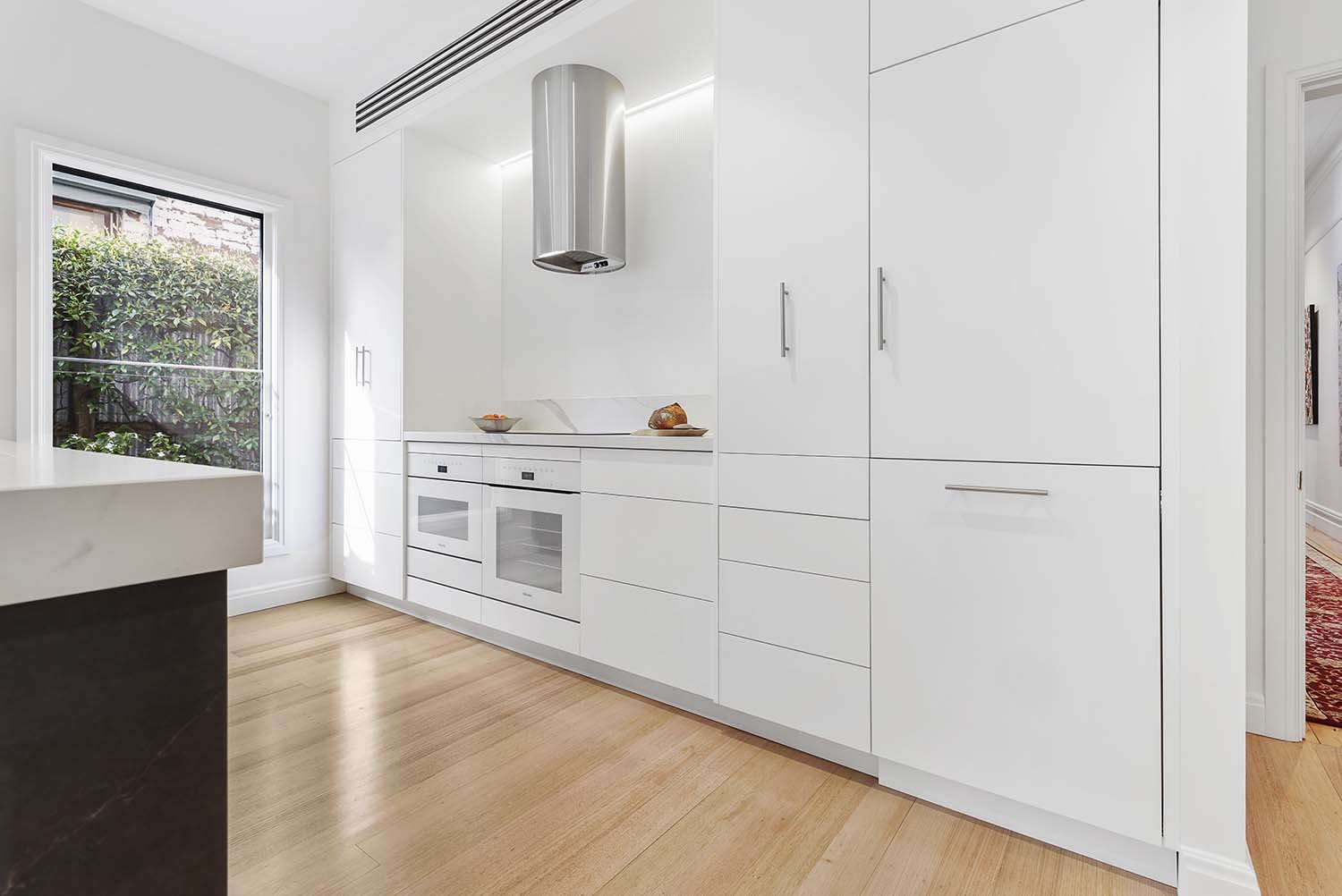

Designing for daily rituals goes beyond choosing attractive finishes. It means paying attention to the details you live with every day, including the ones you only notice when they are wrong.
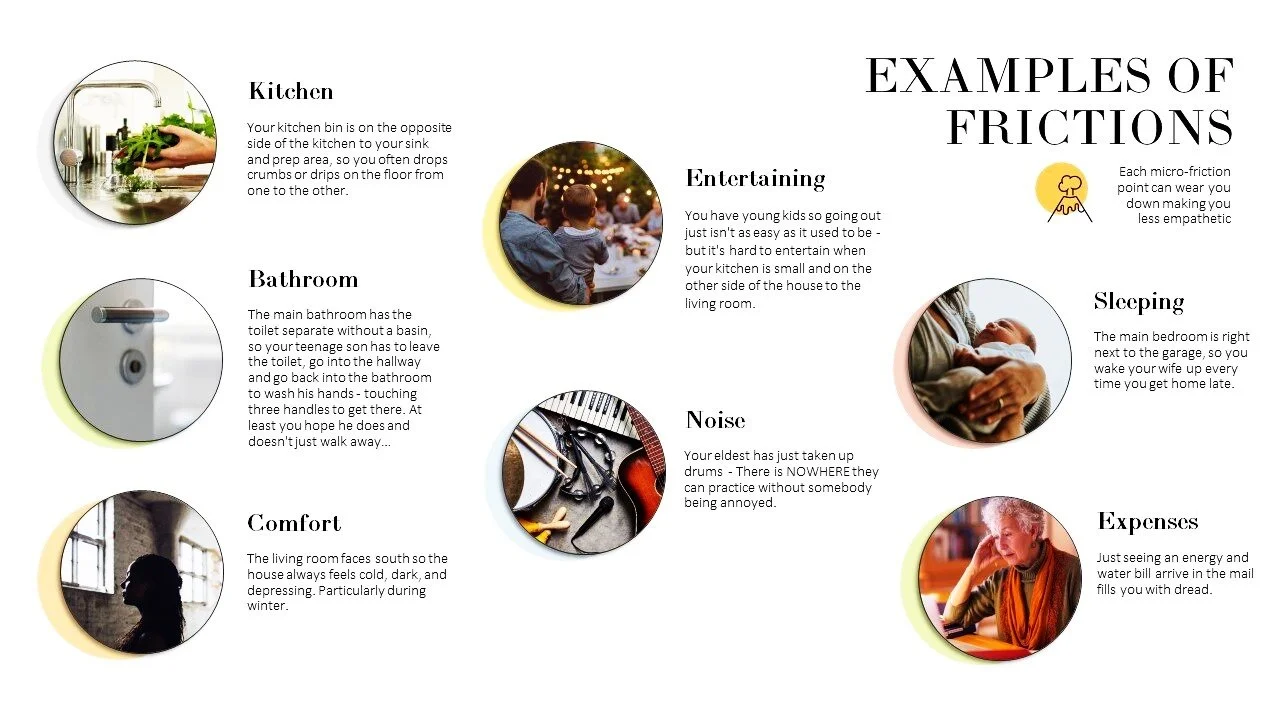
Seven everyday examples of design friction
When I ask clients to talk me through an ordinary day, these are the kinds of problems that often emerge. The right response is not identical for every household, but the examples show how small planning decisions can have a lasting effect.
• Kitchen
The bin is across the kitchen from the sink and preparation area, so crumbs and drips cross the floor every time someone cooks.
Design response: Locate waste and recycling where food is prepared and cleaned up.
• Bathroom
A separate toilet has no basin, so people must touch several handles before they can wash their hands.
Design response: Include a hand basin within a separate toilet wherever space and services allow.
• Comfort
The main living room faces south and receives little winter sun, leaving it cold and gloomy for much of the year.
Design response: Test orientation, glazing and room placement early, then combine passive solar design with insulation, shading and suitable heating.
• Entertaining
The kitchen is isolated from the living and outdoor areas, so the person preparing food is separated from everyone else.
Design response: Improve the relationship between cooking, dining and gathering spaces rather than assuming every home needs one enormous open-plan room.
• Noise
Music practice, gaming, television and focused work all compete within the same acoustic zone.
Design response: Plan quiet and noisy activities deliberately, using distance, doors, storage and acoustic construction where needed.
• Sleeping
A bedroom shares a poorly insulated wall with the garage or main living area, so late arrivals and evening activity disturb sleep.
Design response: Use room placement, wardrobes, circulation spaces and acoustic insulation to create a buffer.
• Running costs
A home is expensive to heat, cool and operate because draughts, poor insulation and inefficient services were never addressed as a whole.
Design response: Improve the building fabric first, then select efficient systems and consider on-site energy generation.
These are examples, not universal rules. Some frictions are common and others are intensely personal. Good custom design begins by finding out which ones matter in your household.


A charging point near the place you naturally use a phone or tablet can remove one small daily nuisance. The exact outlet matters less than putting it where the routine happens.
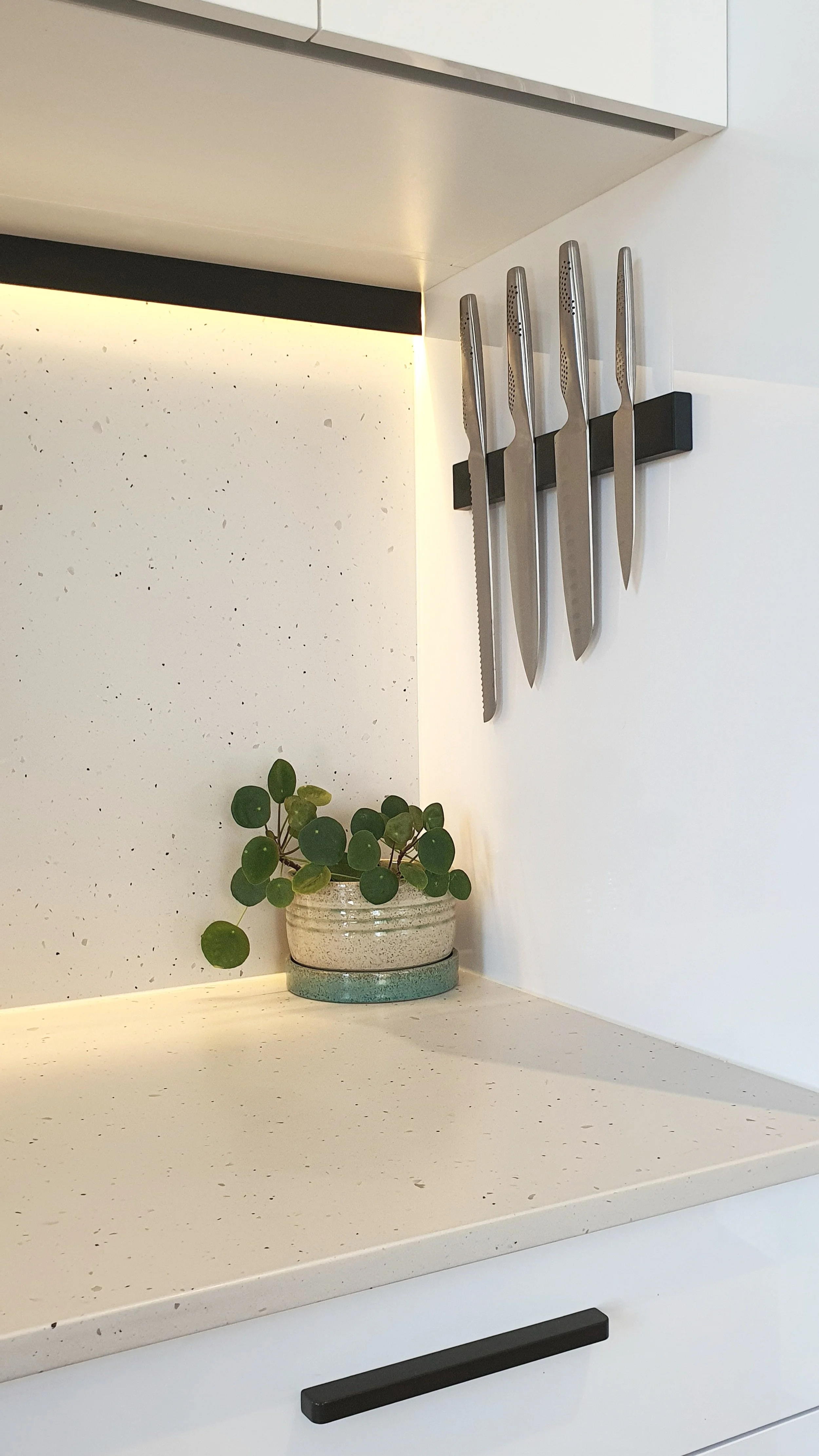
The same applies to everyday tools and appliances. Decide what should remain within reach, what should stay on display and what needs a proper place out of sight.
“Everything that irritates us about others can lead us to a better understanding of ourselves.
- Carl Jung”

Our briefing process looks closely at the way you live now and the way you expect life to change. We ask about routines, preferences, recurring frustrations and the moments you most value.
Those conversations help us distinguish between a home that merely contains the required rooms and one that supports the people living in it. The answer is rarely a fashionable feature. It is usually a series of connected decisions about space, light, movement, storage, comfort and privacy.
That is what Live [in] Your Values means in practice: your priorities shape the design rather than being squeezed into a generic solution.
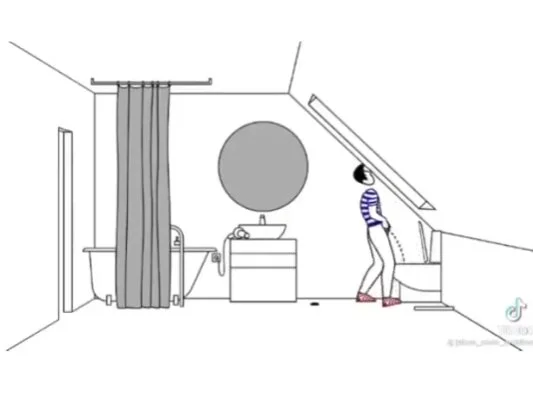
A short design animation
This short animation explores the same idea: good design can turn repeated frustrations into moments of ease and delight.

Live IN Your Values, Designing moments of delight into the everyday
Which parts of your home create friction every day? Which routines feel harder than they should?
If you are considering a substantial renovation or custom home, our Home Masterplan Report helps test your priorities, site constraints, options and likely project investment before you commit to a design direction:
https://www.whiskerarchitecture.com/home-masterplan-report
If you are not sure where to begin, you can book a free 20-minute Clarity Call:
https://www.whiskerarchitecture.com/book-architect-clarity-call