

WHISKER [IN]QUIRY
ARCHITECTURAL PHILOSOPHY · ESSAY 1
Curiosity: How We Think
Good architecture does not begin with creativity. It begins with curiosity.
A philosophy still in motion. This essay records how we think now, and remains open to what practice may teach us next.
Before the first sketch
Most people expect the first meeting with an architect to be about ideas. They imagine sketches, floor plans, materials and inspiration images. Those things will come, but they are not our first responsibility.
Our first job is not to design. It is to discover.
We need to understand the people who will use the building, the place it will occupy and the circumstances that will shape what is possible. We ask about routines, frustrations, ambitions, children, pets, ageing parents, entertaining, cooking, working from home, storage, maintenance and the small rituals that rarely appear in a conventional brief.
We ask which parts of a home are loved, which parts are endured and which parts quietly make each day harder than it needs to be.
The quality of a design is limited by the quality of that understanding. Creativity can produce an elegant answer to the wrong question. Curiosity helps us find the question that actually matters.
Curiosity is not indecision
Clients sometimes ask, ‘Could we do this?’ My honest answer is often, ‘I do not know yet.’ That is not avoidance. It is recognition that an answer has to be earned.
Before we recommend a direction, we may need to understand planning controls, bushfire conditions, heritage obligations, structure, drainage, solar access, budget, construction sequencing or the different priorities held by people in the same household. The first answer is often too shallow because it responds to the visible request rather than the underlying need.
Curiosity is therefore not a lack of expertise. It is one of the ways expertise behaves responsibly. It resists the pressure to sound certain before the evidence is available.
In architecture, confidence should not mean pretending that every question already has an answer. It should mean having a process for finding one.
People before rooms
A conventional brief may say that a client wants three bedrooms, two bathrooms and an open-plan kitchen. That describes rooms. It does not yet describe a life. The written brief is often only the beginning; our job is to find the real brief beneath it.
A useful brief asks why the kitchen matters. Does one person cook while another keeps them company? Does the family eat together every night, or is the dining table mainly used for homework and weekend gatherings? Are mornings calm or chaotic? Does someone need to retreat from noise?
These questions are not decorative extras. They are design information. They determine whether a kitchen island becomes a social centre or an obstacle, whether a home office needs acoustic separation or visual connection, whether a laundry should be concealed or celebrated, and whether the best room is the largest one or the quietest one.
Good design quietly removes friction from everyday life. But friction cannot be removed until it has been noticed. Curiosity is the noticing.
Friction is not always visible to the person who is not experiencing it. Human-centred design cannot assume an imaginary average person.
“The quality of a design is limited by
the quality of the understanding that precedes it.”
Whisker Architecture
September 2026
Curiosity also turns the site from a blank canvas into a collaborator
Every place contains more information than a survey can show.
There are the measurable conditions: orientation, slope, vegetation, wind, views, access, neighbours, existing fabric and planning controls. There are also less visible conditions: history, memory, local character, the movement of light, the sound of rain, the way a tree changes the atmosphere of a room, and the stories people attach to a landscape.
A site-responsive design is not one that simply avoids constraints. It is one that lets those conditions improve the architecture. A steep slope can become split levels rather than excessive excavation. A difficult orientation can produce a carefully controlled courtyard. A retained tree can organise the plan and become part of the family’s daily experience. A bushfire requirement can lead to a more disciplined material palette and a clearer relationship between refuge and outlook.
Curiosity does not ask, ‘How do we overcome the site?’ It asks, ‘What is the site already telling us?’
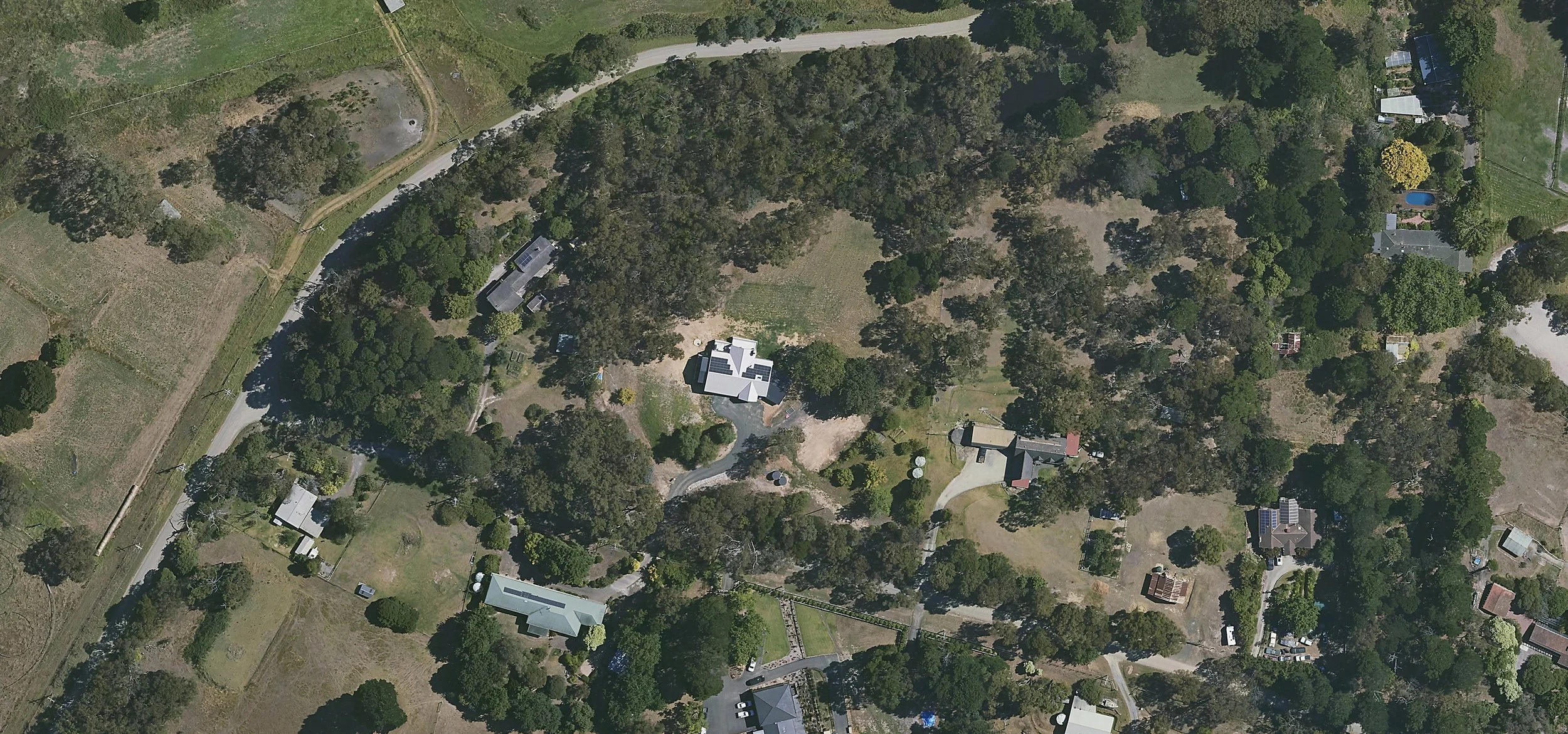
A beacon on the hillside
The Beaconsfield Hillside Home began as a forever home on a steep site. At first glance, the task seemed relatively clear. As we explored it, the project revealed a much richer story.
The slope suggested a series of levels that could settle into the land rather than forcing a single platform across it. A mature oak tree influenced the placement of the bedroom wing. Northern light, water collection, bushfire resilience and the desire for a strong connection to the landscape became opportunities to shape the home rather than technical obligations added later.
The story grew from sustained attention to the people and place, and the architecture followed.

Exploring before narrowing
Curiosity is built into our Home Masterplan process. We deliberately explore more than one viable direction before recommending a pathway.
That exploration is not about producing options for the sake of presentation. It is about making the consequences of different choices visible. One option may retain more of the existing home. Another may improve orientation. Another may achieve the family’s core goals with a smaller footprint.
By comparing these pathways, clients can see what each decision gains and what it sacrifices. They can also develop confidence that the recommended direction was not simply the first idea drawn. It has been tested against alternatives.
Sometimes the smallest intervention is the most intelligent one. Occasionally the most responsible recommendation is not to proceed at all.
Curiosity protects clients from the false momentum of a project that has begun to move before anyone has asked whether it should.
Curiosity and style
Architects are often expected to have a recognisable style. We understand the attraction. Style creates coherence, and a clear body of work can help people recognise whether a practice’s sensibility resonates with them.
We naturally gravitate towards contemporary architecture. But we do not believe good architecture belongs to one aesthetic. Every style can be thoughtful or careless. The test is whether it is appropriate to the people, place, story and means available.
The consistency we seek is not sameness of appearance. It is consistency of attention.
“Creativity without understanding is styling. Curiosity creates strategy.
Strategy creates confidence. Architecture is the outcome.”
Whisker Architecture
September 2026
Curiosity after completion
Curiosity does not end when the drawings are issued. It continues through consultant coordination, approvals, tendering, construction and occupation.
Every site question reveals how information has been understood. Every substitution tests which parts of the design are essential and which can change. Every completed project creates knowledge that can be carried into the next one. Post-occupancy conversations are particularly valuable because architecture reveals itself slowly.
Good ideas reveal themselves on ordinary Tuesday mornings, not only on completion day.
Curiosity is therefore a duty of care. Every thoughtful question reduces uncertainty, exposes risk, reveals opportunity and increases the chance that a building will genuinely belong to the people who use it. Creativity develops the solution. Curiosity discovers what the solution needs to solve.
Creativity without understanding is styling. Curiosity creates strategy. Strategy creates confidence. Architecture is the outcome.
Continue the conversation
What would change in your home if someone became genuinely curious about the routines you usually take for granted?
