WHISKER [IN]QUIRY
ARCHITECTURAL PHILOSOPHY · ESSAY 3
Live in Your Values: How We Design
Style is the language. Values are the message.
A philosophy still in motion. This essay records how we think now, and remains open to what practice teaches us next.
Buildings reveal what matters
Architecture has always expressed values. Gothic cathedrals reached towards the heavens and made faith spatial. Monumental civic buildings projected authority. Modernism celebrated new materials, efficiency and a break from historical ornament. Every era leaves evidence of what it admired, feared, believed and wanted to become.
Homes do the same thing at a smaller and more intimate scale. Whether we intend them to or not, they reveal priorities. A house may express generosity through a table that always has room for one more person. It may express retreat through a quiet room away from the main living area. It may express environmental responsibility through a smaller footprint, durable materials and excellent thermal performance. It may express nostalgia by preserving a familiar facade or a piece of joinery that carries family history.
Design decisions are never entirely neutral. They distribute space, money, attention and care. They show what has been protected and what has been allowed to change.
Our guiding principle, Live, Learn and Work [in] Your Values, begins with that recognition. Architecture should not be a display of the architect's values at the expense of the people who use it. It should help make their values inhabitable.
Values are rarely tidy
Very few people hold one value in isolation. A project may need to balance comfort and cost, beauty and maintenance, heritage and innovation, openness and privacy, sustainability and a desire for generous space.
These are not signs that a brief is confused. They are signs that real life is involved.
Good design does not remove every tension. It helps people negotiate those tensions honestly. Sometimes two values can be resolved through a better idea. Sometimes one has to take priority. Sometimes a compromise is accepted because the alternative would damage something that matters more.
The architect's task is not to moralise about those choices. It is to make their consequences visible and help the project find coherence.
That requires going beyond stated preferences. A room list, an inspiration image or a requested feature may be evidence of a need rather than the need itself. The deeper task is to understand the routines, relationships, sensory needs, privacy, rituals, ambitions and future changes that sit underneath the request. Custom architecture begins when the brief becomes specific to the life people are living, and the life they are growing into.
“Architecture should not be a display of the architect's values at the expense of the people who use it. It should help make their values inhabitable.”
Whisker Architecture
September 2026
Bungalow Reborn
Bungalow Reborn is a useful example because the project did not begin with a desire to choose between old and new. It began with a desire to respect both.
The existing bungalow carried history, character and a familiar relationship to the street. The new work needed to support contemporary family life, improve thermal comfort and introduce durable, low-maintenance materials. Copying the original house would have blurred the difference between what was inherited and what was added. Ignoring it would have discarded a meaningful part of the place.
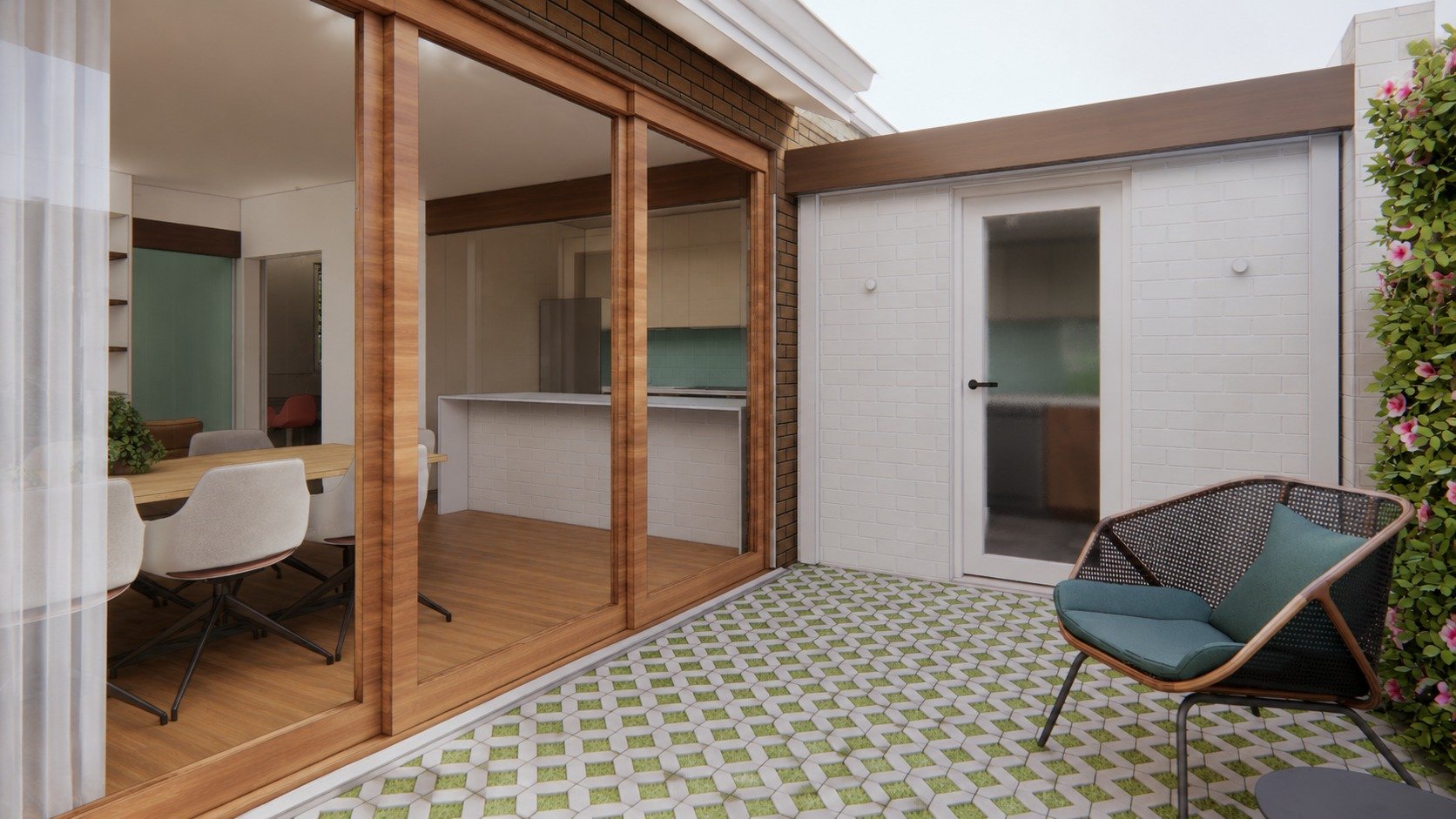
The design restored the heritage facade and allowed the contemporary extension to step quietly behind it. Exposed brickwork and profiled metal created a material language that was robust without pretending to be old. High-performance insulation and careful detailing supported comfort in ways that were largely invisible.
The relationship between old and new became a conversation rather than a competition. The project acknowledged history without allowing history to prevent the house from serving the life ahead of it.
The green kitchen and the imaginary future buyer
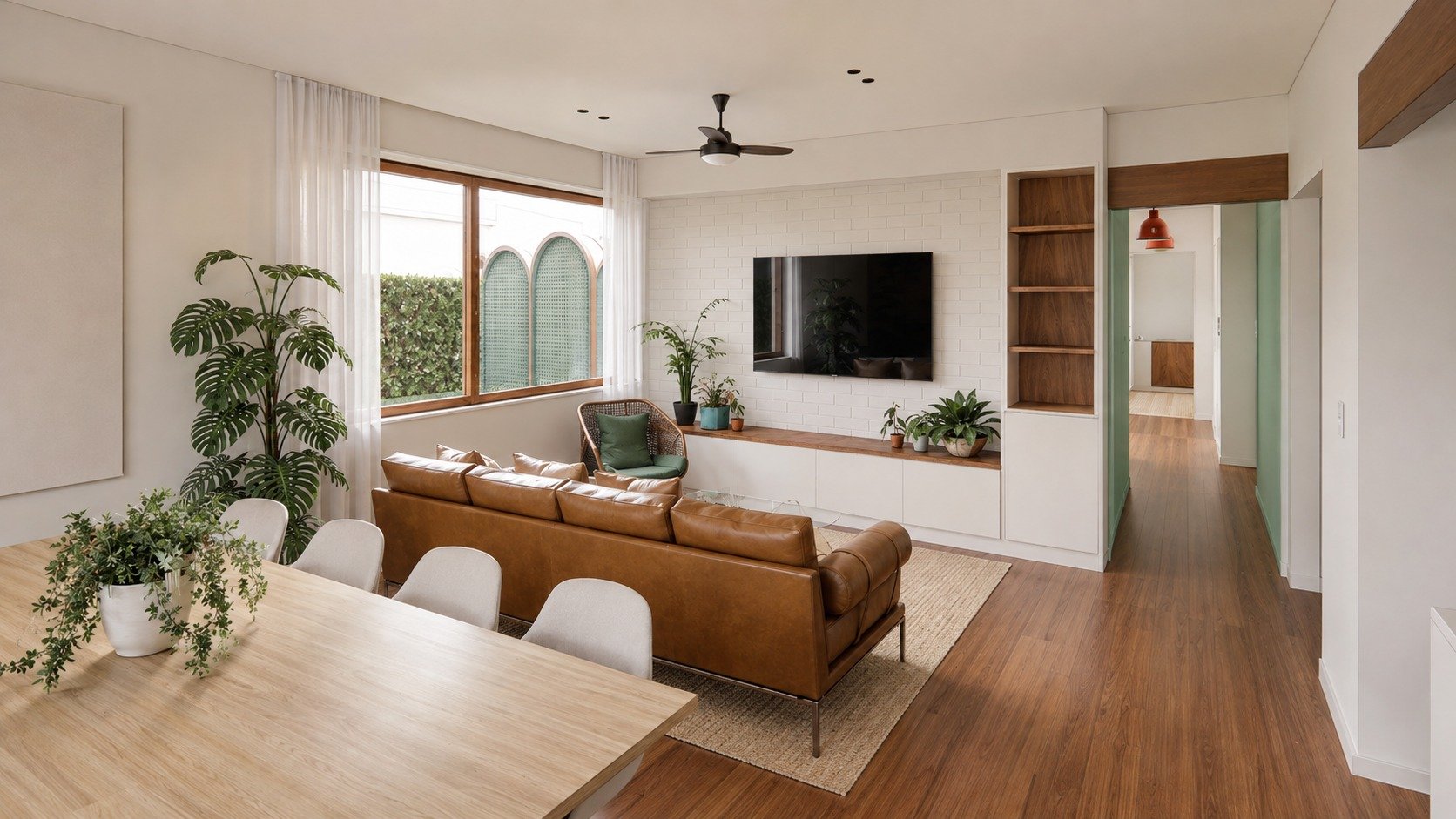
Inside Bungalow Reborn, another values conversation appeared through colour.
The clients loved colour, but they were worried that bold decisions might reduce resale value or become something they regretted. On the surface, this looked like a finishes discussion. Underneath it was a question about whose approval the home was being designed to seek.
Were they creating a home for themselves or for an imagined future buyer?
There was no universal answer. Resale may be a legitimate priority, particularly when people know a home is temporary. In this case, however, the fear of future judgement was beginning to overrule the clients' actual pleasure in the present.
The conversation led to a green kitchen and a series of carefully placed moments of colour. The result was not reckless self-expression. It was a calibrated decision to let the home belong to the people living there now.
Designing the life, not the photograph
The layout of the project expressed values as clearly as its materials.
The kitchen became the heart of an L-shaped living space. Parents could share coffee with friends while children played nearby. Activities could remain connected without requiring everyone to occupy one undifferentiated room. The house supported togetherness and retreat as complementary needs.
“A good decision is not always the one an architect would make personally. It is the one that a client can make with their eyes open, in alignment with what genuinely matters to them.”
Whisker Architecture
September 2026
The house is there to become the backdrop to a family's memories, not to remain a giant statement about the architect who designed it.
This is a recurring concern in our work. Open plan is not a value in itself. Neither is cellular planning. The question is what kind of relationships the plan should support.
A room may look expansive in a photograph and still make everyday life more difficult. A smaller room may create better acoustics, easier furniture placement, more privacy or a stronger sense of comfort.
Good architecture should continue supporting people long after the excitement of completion day wears off.
Style as vocabulary
Whisker naturally leans towards contemporary architecture. We enjoy clarity, honest material relationships, strong geometry, careful light and a legible distinction between old and new. This is the visual language in which we are most fluent.
But fluency should not become rigidity.
We are intentionally style-agnostic in the sense that we do not begin by deciding what a project must look like in order to resemble Whisker. A traditional house can be thoughtful. A modern house can be careless. A heritage restoration, a restrained extension, a coastal retreat and a highly efficient new home may share very few visual characteristics while still being guided by the same quality of reasoning.
Our true style may be less visual than procedural. It lies in how we listen, how we reveal trade-offs, how we treat context, how we coordinate technical performance with emotional experience and how we keep returning to the people who will live with the outcome.
The buildings are different dialects. The philosophy is the language beneath them.
Beauty is not a guilty pleasure
A values-led approach can be misread as though beauty is secondary or indulgent. It is not.
Beauty matters because people are sensory and emotional. Light, proportion, texture, colour, sound and material can create delight, calm, recognition and belonging. A beautiful home can make an ordinary routine feel cared for. A beautiful school can communicate that students and teachers deserve attention. A well-made threshold or a piece of joinery can offer pleasure hundreds of times without asking to be noticed consciously.
The classical architectural idea of commodity, firmness and delight remains useful precisely because none of the three is sufficient alone. A building that functions but creates no pleasure can feel impoverished. A beautiful building that performs badly can become a burden. A technically robust building that ignores how people actually use it may endure physically while failing socially.
Beauty is not the only measure of good architecture. It remains one of them.
Sustainability as a value, not a costume
Sustainability is often communicated through visible devices or a particular aesthetic. In practice, much of a building's environmental performance is quiet.
It lies in orientation, insulation, airtightness, shading, efficient services, durable materials, sensible area, maintenance, water management and the ability of a building to remain useful for a long time. It also lies in not spending money and carbon renovating spaces that fundamentally do not work.
Our Passive House knowledge informs this thinking, but certification is not the only way environmental responsibility can appear. The appropriate level of performance depends on the project, budget and values of the client. Our responsibility is to explain the implications honestly and help people choose with understanding.
A sustainable home that a family dislikes, cannot maintain or needs to alter immediately is not a complete success. Longevity includes affection. Some of the most sustainable homes are the ones people continue loving.
Values without judgement
Values-led design requires a particular kind of humility. Clients may value things we would not prioritise personally. They may choose more space, a particular material, a fireplace, a spa or a formal room that another client would reject.
“Drawing is not the service we provide. Thinking is.”
Whisker Architecture
September 2026
Our role is to bring evidence, professional judgement and ethical responsibility to the conversation. It is not to make people feel morally inadequate for having different priorities.
That does not mean every request should be accepted. Some choices create unacceptable risk or harm. Some conflicts cannot be designed away. But most residential decisions sit within a more ordinary territory of trade-offs, where context matters and judgement should be proportionate.
The goal is not to design our values into someone else's home. It is to help reveal theirs, test them against reality and translate them into architecture with integrity.
A quiet expression of who we are
Living in your values does not require a house to announce itself. Often the deepest values appear quietly.
They appear in the morning sun reaching the breakfast table, in a seat where someone can be alone without feeling isolated, in a durable floor that allows children and animals to be themselves, in a room that welcomes an ageing parent, or in a view that makes arriving home feel different from the rest of the day.
When architecture aligns with what matters, it becomes more than shelter and more than style. It becomes a quiet expression of who people are, what they care for and the life they are trying to build.
Continue the conversation
Which value is your home currently expressing most clearly - and is it the value you would choose?