Why a Builder's Rough Quote Is Not a Budget
A quick price from a builder can be useful as an early sense check, but it is not the same as a project budget, detailed estimate, tender or contract price. The difference is usually not honesty. It is the amount of information available and what the number includes.

What level of finish, documentation and site work does the early figure assume?
Estimate, quote and project budget are different things
A verbal ballpark figure is usually based on limited information, previous projects and broad assumptions. It may help identify an obviously unrealistic brief, but it cannot account for decisions that have not yet been made.
An order-of-cost estimate uses a defined scope and stated assumptions to give a more structured early range. It should still include qualifications and allowances because the design and market price are not yet resolved.
A builder's tender or detailed quote is prepared from developed drawings, specifications, consultant information and reports. It is more reliable because the builder can see what is being priced, but tenders can still contain exclusions, provisional sums and differing interpretations.
The contract price is the accepted amount under the building contract. It is not necessarily the final project cost because variations, latent conditions, client changes and other costs may still arise.
A complete project budget sits around the construction price. It may also include professional fees, authority charges, surveys, investigations, permits, temporary accommodation, finance, furniture, contingency and other client costs.

Does the early figure include the custom joinery, appliances and level of finish you expect?
Why early figures move
At the start, the builder may not know the extent of demolition, structural work, service upgrades, ground conditions, access constraints, planning requirements, energy upgrades or the quality of finishes. Even the proposed floor area may still be changing.
Common omissions or uncertain allowances include:
• demolition and disposal
• site access, excavation and temporary works
• structural and geotechnical requirements
• authority and service upgrades
• windows, glazing and external shading
• custom joinery, appliances and fixtures
• external works, drainage, landscaping and driveways
• planning, building permits and consultant fees
• escalation, GST and contingency
A number can be reasonable for the assumptions behind it and still be unsuitable as the amount a homeowner uses to plan the whole project.
Examples from our experience
On one renovation and extension, the homeowner had received a verbal figure of about $250,000 before the scope was defined. When Whisker Architecture tested three feasibility options and their broader project costs, the direction that met the brief indicated construction closer to $750,000. The later figure was not a tender or guarantee, but it exposed how much work the original conversation had not allowed for.
On another new-home project, an early verbal figure of about $800,000 shaped the client's expectations. By the town planning stage, the developing scope indicated about $1.1 million plus professional and project costs, with later pricing expected to be nearer $1.3 million. This was broadly consistent with our earlier feasibility advice, but the lower number had already become the client's reference point.
These are individual Whisker Architecture experiences, not statistical evidence or a prediction for every project. They show why the basis, inclusions and stage of any early number matter.
Site, approvals and existing conditions matter
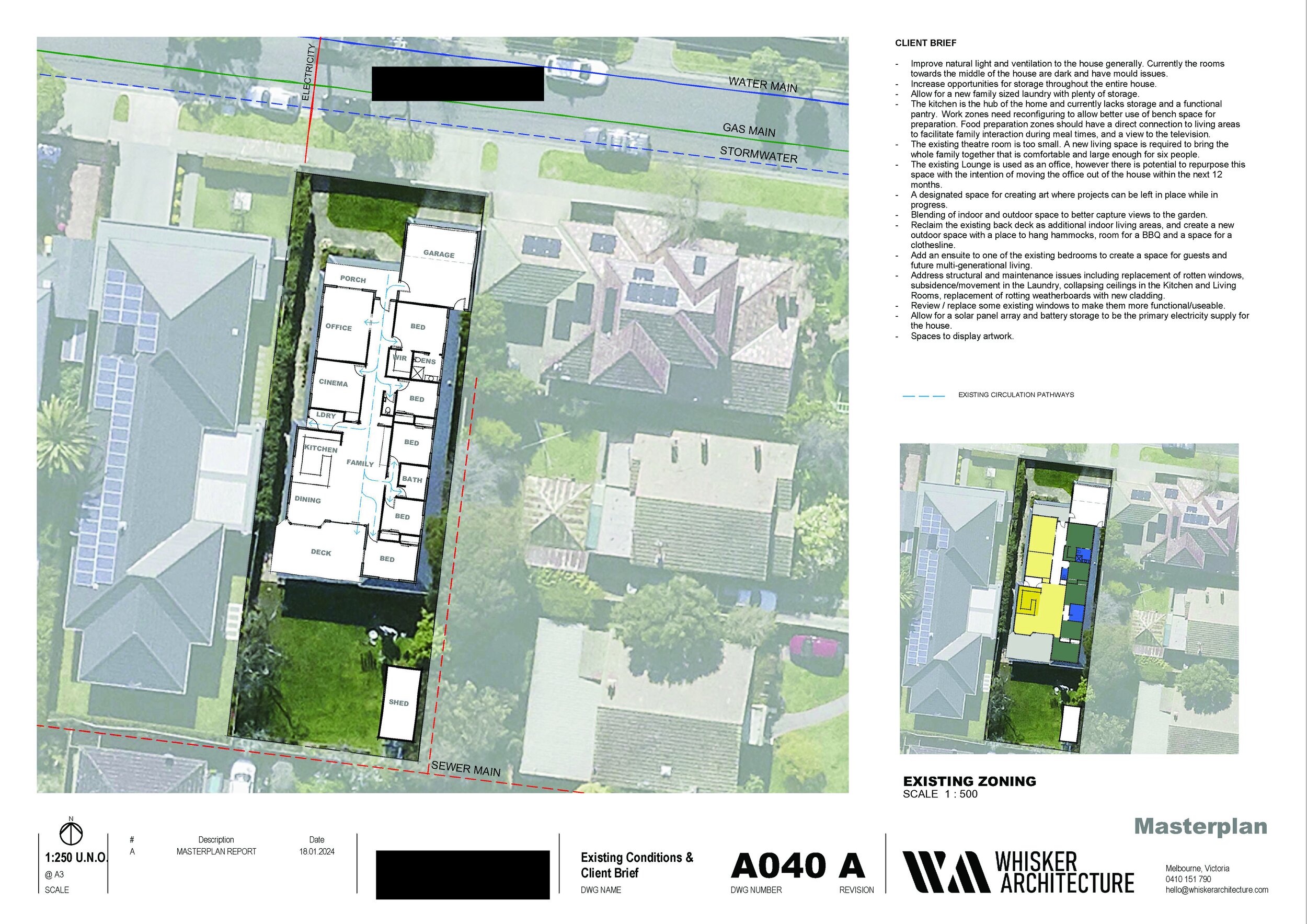
Planning controls, bushfire or flood requirements, existing services, access, soil conditions and the condition of the existing building can materially change the scope. These issues need project-specific investigation rather than a standard square-metre rate.
How our approach changed
When Whisker Architecture began in 2020, we also used broad square-metre rates more heavily during early conversations. The rapid cost changes and project-specific differences experienced through the following construction market made the limits of that approach difficult to ignore.
We now prefer to define strategic options, identify major site and scope assumptions, and use structured order-of-cost information that can be updated as the project develops. It is still an estimate, not a promise of the tender result.
How to use early cost advice well
Ask what information the number is based on.
Ask what is included and excluded.
Ask whether GST, demolition, external works, consultants, permits and contingency are allowed for.
Ask what quality and level of finish have been assumed.
Ask whether the number is a range, estimate, quote or contract price.
Record the date because market conditions and project timing matter.
Update the advice when the scope or documentation changes.
Who should you trust?
The architect, estimator and builder have different roles. Early in the project, an architect can help define the brief and test strategic options. An estimator can provide order-of-cost advice based on the available scope. A builder can contribute buildability and market feedback, then price developed documentation. None of these inputs should be treated as certainty beyond the information supporting it.
Whisker Architecture's Home Masterplan Report uses defined design pathways and early order-of-cost information to compare scope and budget before full design. It is not a builder's quote or a guarantee of the tender result.
Book a free 20-minute Clarity Call with Audrey if you are planning a substantial renovation or custom home and want to discuss the right starting point.