What Makes a Modern Melbourne Home Work?
Updated 5 October 2026
Modern home design in Melbourne is often presented as a catalogue of trends: open-plan living, smart technology, statement lighting and a particular palette of finishes.
Those choices can be useful, but a home earns its place through the way it supports daily life. It should respond to the site and climate, make ordinary routines easier, use space deliberately and remain adaptable as a household changes. Style lasts longer when it grows from those decisions.
Still comparing possibilities? Explore what goes into a Home Masterplan Report.

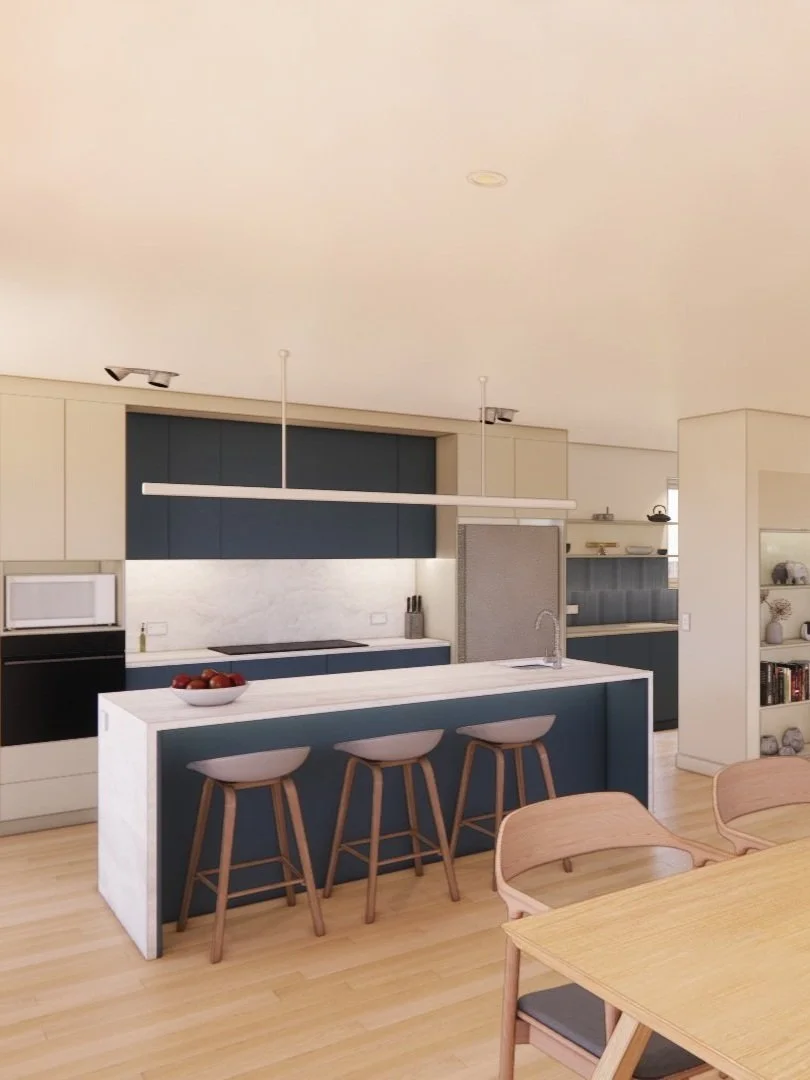
Pascoe Vale Bungalow Reborn, Live [in] Your Values
Start with how you live
Before drawing a floor plan, we want to understand the small rituals that shape a household. Where do school bags land? Who cooks, and who likes to talk to them while they do? Do you need quiet separation as well as shared space? Which rooms receive guests, pets, hobbies or work? What might change over the next ten or twenty years?
A useful design brief describes how life needs to work, rather than only how the finished photographs should look.
Light, orientation and comfort
In Melbourne’s variable climate, more glass is not automatically better. Window size, orientation, shading, insulation and ventilation need to work together.
A carefully placed window or void can bring daylight deeper into a plan, but its acoustic, thermal and maintenance consequences should be understood before it becomes a feature. Comfort begins with these relationships, rather than appliances added after the plan is fixed.
Open plan, with places to retreat
Open-plan living can create connection and make a modest footprint feel generous. It can also spread noise, cooking smells and visual clutter through the house.
A contemporary home can combine shared spaces with a study, retreat or second living area that closes off. The question is where openness improves daily life and where separation protects it.
Storage that reduces friction
Storage is part of the architecture. An entry needs somewhere for shoes, keys and bags; a kitchen needs storage organised around preparing, cooking, cleaning and resetting. A laundry works better when hampers, drying and supplies have planned positions.
When joinery is designed around real objects and routines, a home can feel calmer without needing to be larger.
Materials chosen for time
We assess materials for durability, maintenance, repairability, environmental impact and how they will age. A contemporary palette does not need to chase every new finish.
At Saltbush Retreat in Warrnambool, material choices respond to coastal conditions and a low-maintenance forever-home brief. At Bungalow Reborn in Pascoe Vale South, new work gives a long-lived house a clearer relationship between old and new.
Technology with a job to do
A useful system should solve a real problem, remain understandable to the people living with it and have a credible maintenance pathway. Good orientation, shading, zoning and building-fabric decisions still need to be made.
A home designed beyond the trend cycle
The strongest modern homes are specific to their people and site. They use floor area deliberately, balance connection with privacy, consider daylight and comfort, and allow for change.
Explore our residential architecture approach for substantial renovations and custom homes. The Home Masterplan Report helps compare layout options, planning constraints and early budget before detailed design begins.