Spring Clean Your Home Before You Renovate
My sister has just moved into her new house, which is very exciting news.
Even better, she is not planning to renovate immediately.
As an architect, I think this is sensible.
When you first move into a house, it can be tempting to start making big renovation decisions straight away. The kitchen feels wrong. The bathroom is dated. The laundry is in the wrong place. The storage does not work. The whole house can feel like it needs to be solved immediately.
But often, the best thing you can do before renovating is to live in the house for a while.
In our experience, living in your home for at least six months before starting renovation work can be incredibly useful. You learn how the light moves through the rooms. You discover which spaces you actually use. You notice where bags, shoes, laundry, school notes, dog leads and paperwork naturally land. You start to understand whether the “obvious” renovation problem is really the problem, or just the first thing you noticed.
That said, there is a warning attached.
Living in your house for six months before renovating can be wise.
Living in your house for six years, or twenty-six years, while waiting to “get around to it” is another thing entirely.
So, this spring, here are some things you can do before a real renovation. Think of it as a functional spring clean: not just clearing out cupboards, but testing how your home could work better.

1. Look at the flow through your home
Before you buy anything new, look at how people move through the house.
Are the main pathways smooth, or are you constantly walking around furniture? Do doors clash with furniture? Do you have to squeeze past chairs, baskets, kids’ stools, shoes, washing baskets or drying racks?
A simple way to test this is to draw or mentally map the main flow lines through the house:
front door to kitchen
kitchen to dining table
bedrooms to bathrooms
laundry to clothesline
garage or driveway to pantry
bathroom to towel storage
children’s rooms to play areas
Then arrange your furniture to support those pathways.
Some rooms, especially older narrow rooms, may even work better with cupboard doors or non-essential room doors removed temporarily. That does not mean demolishing anything. It simply means testing whether the space works better with fewer obstructions.
Also look at temporary items that need to be accessible, but not always underfoot. Step ladders, children’s bathroom steps, laundry baskets, school bags, dog leads, shopping bags and ironing boards often create daily friction because they do not have a proper home.
Temporary hooks, removable wall hooks, over-door hooks or hooks inside joinery can make a surprising difference. The aim is not perfection. The aim is to get things off the floor, off the benchtop and out of the circulation path.
2. Look at your workflows, not just your rooms
If a space frustrates you, there may be something in the built environment causing that frustration.
“I’m just messy.”
“We’re bad at laundry.”
“The kids never put things away.”
“The kitchen always ends up chaotic.”
But often the issue is not personal failure. It is workflow failure.
For example:
There may be nowhere dry to put clean clothes after a shower.
The laundry basket may be in a location nobody naturally walks past.
The bin may be too far from the food preparation area.
The pantry may be technically large, but difficult to see into.
School bags may be dumped at the dining table because there is no useful drop zone near the entry.
Cleaning products may be stored too far away from where they are actually used.
Instead of thinking room by room, think routine by routine.
Map out a typical morning. Then map out a typical evening. Then map out laundry day, grocery unpacking, school bag unpacking, dog walking, cleaning, bathing children, working from home, entertaining, or whatever routines apply to your household.
Where does the friction happen?
That friction is data.
It tells you what your future renovation, joinery, storage or layout might need to solve.

3. Unpack only what is necessary
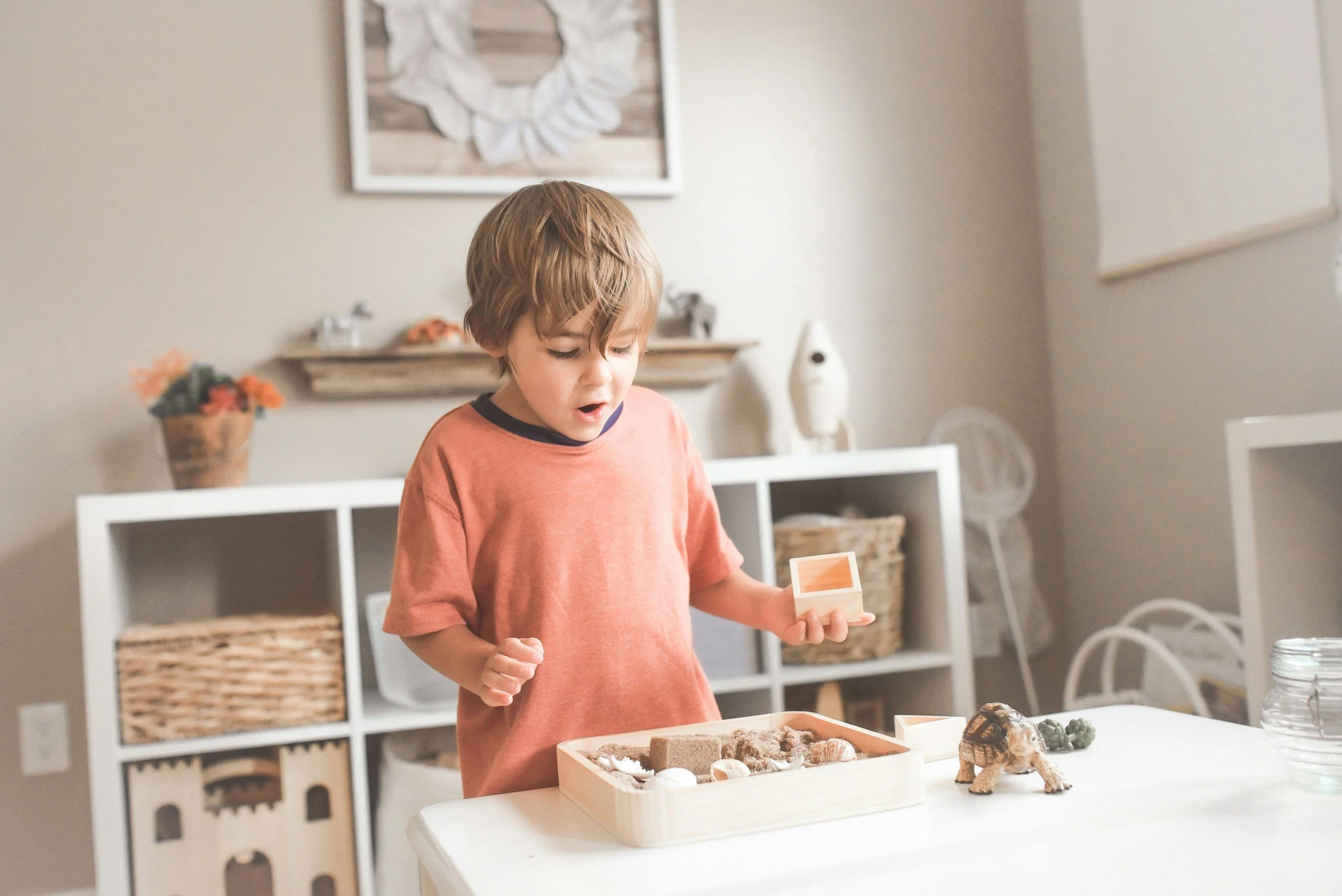
Moving house is one of the best opportunities you will ever have to interrogate how much you actually need.
Instead of unpacking everything automatically, try this:
Unpack the things you genuinely need and use.
If something is not needed, put it back in a box. Label the box clearly with the contents and the date. Then put a reminder in your phone or calendar for six or twelve months later.
When the reminder goes off, ask yourself:
Did I use it?
Did I miss it?
Does it fit my current life?
Is it emotionally significant enough to keep?
Does it deserve space in my home?
Some things absolutely do deserve space, even if they are not “useful”. Old photo albums, keepsakes, children’s drawings, family history and sentimental objects may matter deeply.
But other things are just things we have carried from one cupboard to another for years.
Spring cleaning is not about throwing away your life. It is about deciding what still belongs in this chapter of it.
4. Cull what you no longer need
I am not advocating for throwing out things you genuinely use.
But many households accidentally accumulate multiples over time.
Dozens of towels.
Three incomplete sets of cutlery.
Old mugs nobody reaches for.
Plastic containers without lids.
Expired pantry items.
Flat sheets for beds you no longer own.
Six bottle openers.
Old chargers for devices that disappeared years ago.
If you are empty nesters with no pets, you may not need the same quantity of towels you needed when the children were younger, sportier and muddier.
If you have six types of cutlery in one drawer but only two full sets, perhaps the drawer can work harder with less in it.
If your linen cupboard is technically large but impossible to use, the answer may not be “we need more storage”. It may be “we need less stuff and better organisation”.
This distinction matters.
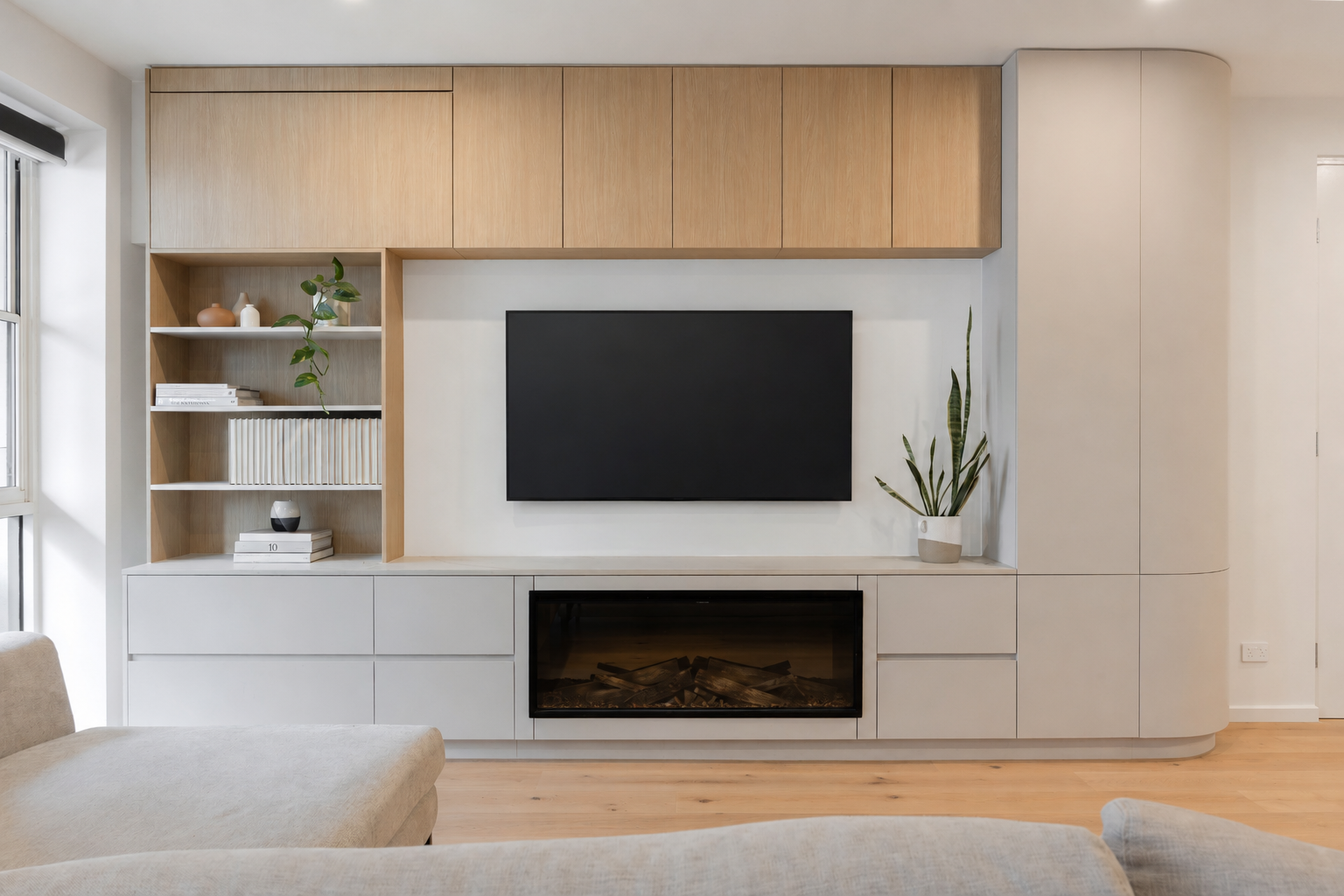
A renovation can give you beautiful new storage, but if you simply transfer unresolved clutter into new joinery, the problem comes with you.
5. Match storage to functions
Good storage is not just about having enough cupboards.
It is about having the right storage in the right place for the way you actually live.
Baskets can keep open shelves organised.
Trays can contain benchtop chaos.
Hooks can keep items off flat surfaces.
Drawer dividers can stop small things becoming one large mixed category.
Temporary shelves can test whether vertical storage helps.
A simple tub near the door can prove whether you need a proper mudroom later.
You do not need everything to be custom, expensive or permanent yet.
This is the time for Kmart, IKEA, Bunnings and whatever temporary systems help you test an idea.
The key is to match what you need, where you need it, when you need it.
A hook in the right location is better than a beautiful cupboard in the wrong room.
A cheap tray that stops paperwork spreading across the whole kitchen bench is doing valuable design work.
A laundry basket that actually sits where people take off clothes is better than a perfect laundry hamper hidden behind a door nobody opens.
6. Do not be afraid to experiment
This is not necessarily the time to make your home aesthetically perfect.
It is the time to experiment.
Move the dining table.
Try the sofa on the other wall.
Test a temporary entry station.
Remove a cupboard door.
Add hooks.
Try a freestanding pantry shelf.
Put a basket where things naturally get dumped.
Trial a different laundry system.
Swap room functions for a month.
Use a spare bedroom differently.
See whether the second living area is really needed, or whether it wants to become a study, playroom, guest room or retreat.
The experiment does not have to be beautiful. It has to be informative.
If something works successfully for more than twelve weeks, that is meaningful. It means the idea is not just a novelty. It may be worth turning into a permanent solution later.
That might become custom joinery, permanent hardware, a reworked doorway, a better laundry layout, a new mudroom, a larger pantry, a different kitchen arrangement, or a more thoughtful renovation brief.
7. Treat your house like a prototype
This is the real opportunity.
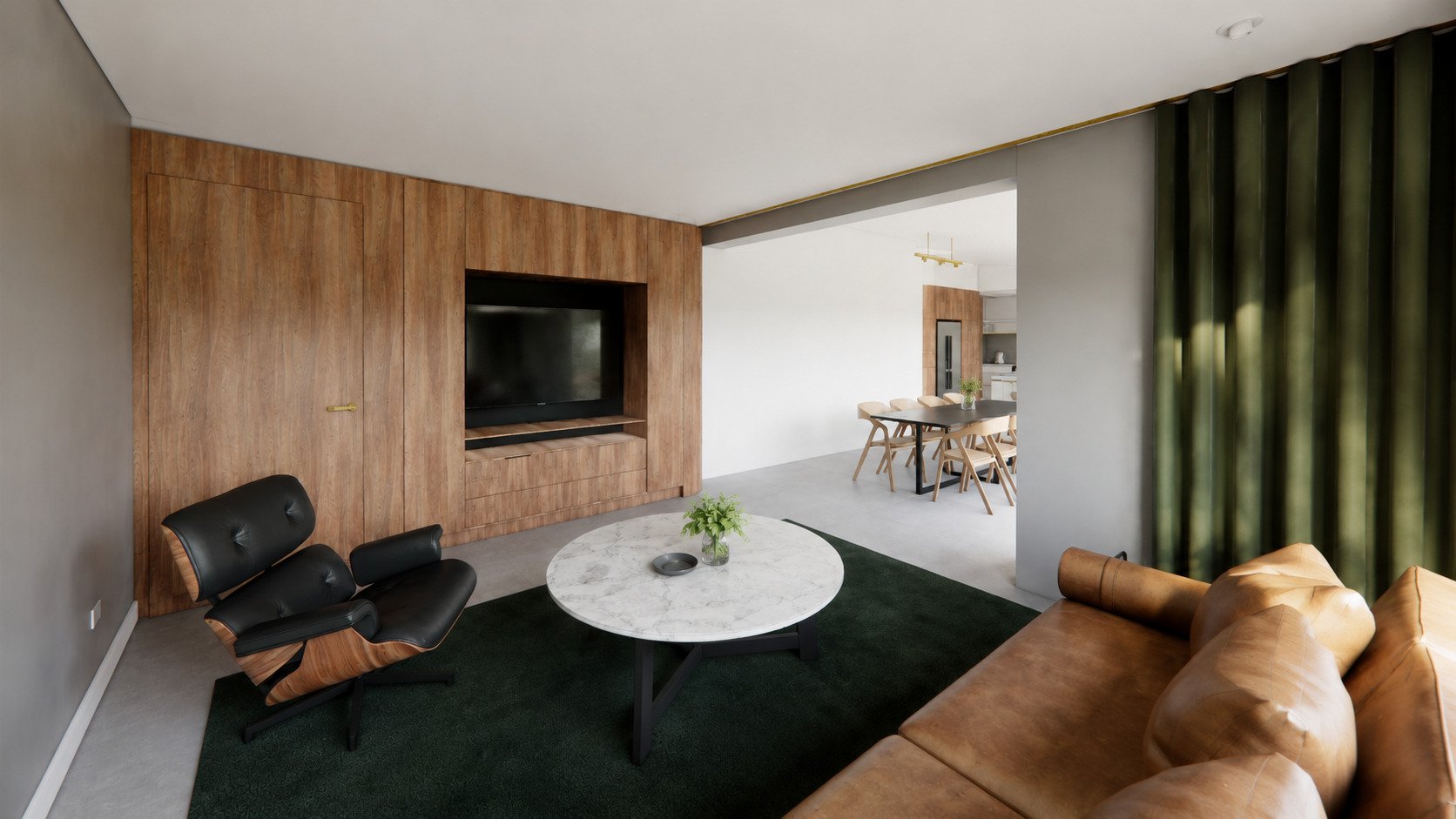
Before you renovate, you can use your existing house as a rough prototype.
Test the flows.
Test the routines.
Test the storage.
Test the furniture layouts.
Test what you actually use.
Test what you are ready to let go of.
Test what makes the house feel calmer, easier and more supportive.
Then, when it is time to renovate, you are not starting from vague frustration. You are starting from evidence.
You know what works.
You know what does not.
You know where the pressure points are.
You know what is worth spending money on.
You know which problems are layout problems, which are storage problems, and which are simply too-much-stuff problems.
That makes the renovation process clearer, more strategic and more likely to result in a home that genuinely works.
So this spring, before you start knocking down walls, start with the smaller work.
Clean. Cull. Rearrange. Label. Hook. Basket. Trial. Observe.
Then, when you are ready, we can help turn the rough prototype into the proper version.
Planning a substantial renovation or custom home?
Our Home Masterplan Report helps you test the brief, priorities, site constraints and likely costs before committing to design.
Book a free 20-minute Clarity Call with Audrey to discuss the right first step for your project.