Smart Storage for a Calmer Home
How thoughtful storage reduces clutter and supports daily life
Storage is easy to underestimate when planning a home. It is less visually exciting than a generous window or a beautiful kitchen, but it has a direct effect on whether rooms feel calm, spacious and easy to use.
Good storage starts with the things you own and the way you move through the day. It should make everyday actions simpler without dominating the room.
1. Start with how you live
Good storage begins with behaviour, not cupboard count.
Before drawing the joinery, consider how people move through the home. Where do shoes come off? Where are keys and bags put down? Which items are used every day, and which only need occasional access?
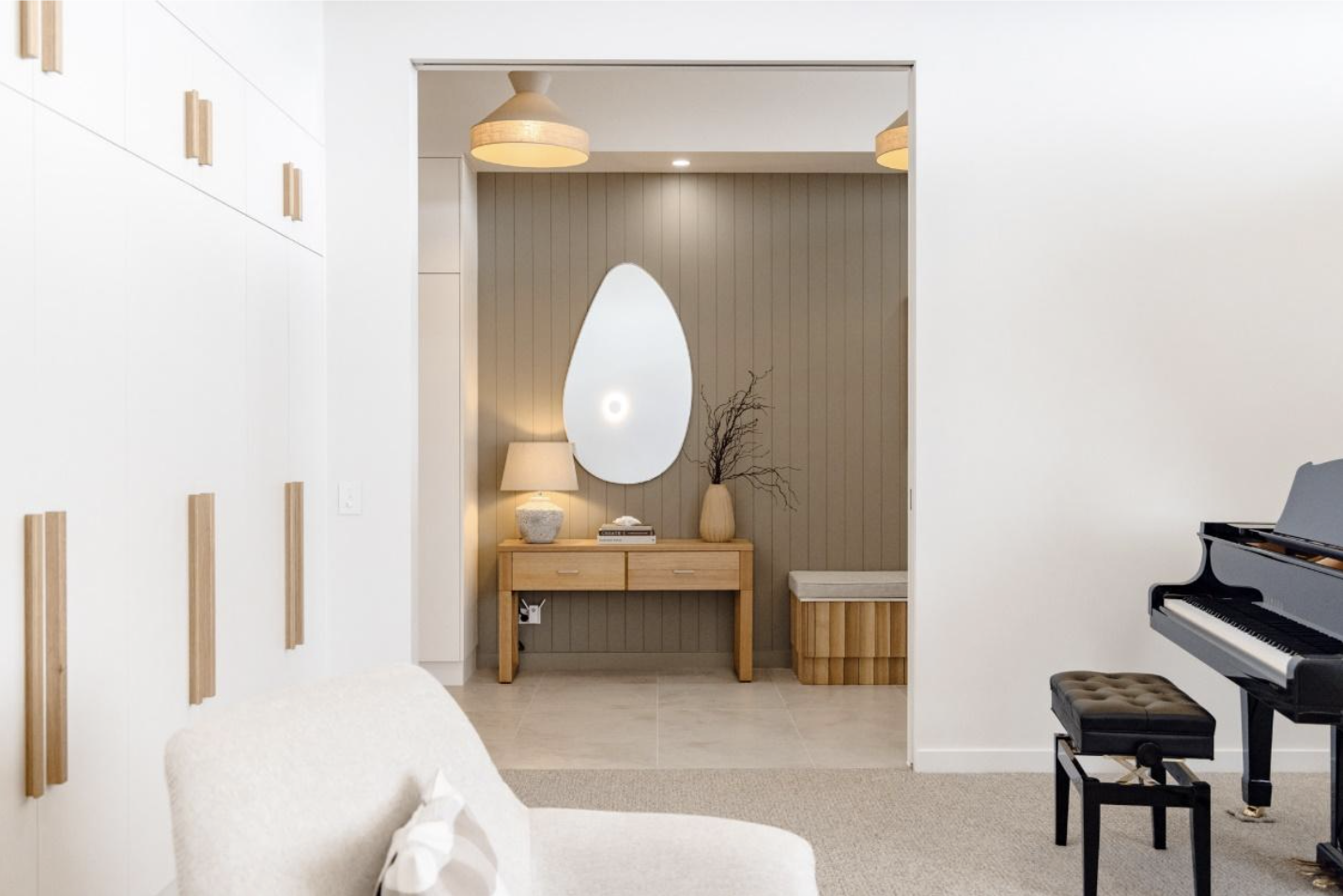
At Saltbush Retreat on Victoria’s south-west coast, wall storage keeps the entry clear and a custom bench seat incorporates shoe drawers. The layout also frames the clients’ existing hall table, allowing new joinery and familiar furniture to sit comfortably together.
Practical details matter. Heavy cookware needs appropriate drawers and runners. A router needs power and ventilation. A robot vacuum needs a charging point and enough clearance to dock. Designing around these requirements early makes the finished space easier to use.
At Saltbush Retreat, built-in wall storage keeps the entry clear, while a bench seat incorporates shoe drawers. The joinery was designed around the clients’ existing hall table, allowing a much-loved piece of furniture to remain part of the room. Photography by Canterbury Creative House.
2. Balance concealed and display storage
Not everything should be hidden. A room usually feels more personal when practical concealed storage is balanced with a smaller amount of open shelving for books, art and objects that matter.
At Beaconsfield Hillside Home, joinery along the circulation spaces keeps everyday clutter out of sight. Open timber shelving beside the stone fireplace is reserved for objects the clients want to enjoy.
Use a restrained material palette so open and closed storage belong to the same room. Timber, painted joinery, stone and metal can work together, but too many competing finishes quickly create visual noise.
Open shelving also needs to suit your tolerance for dusting and tidying. Glass doors can provide display space with less maintenance.
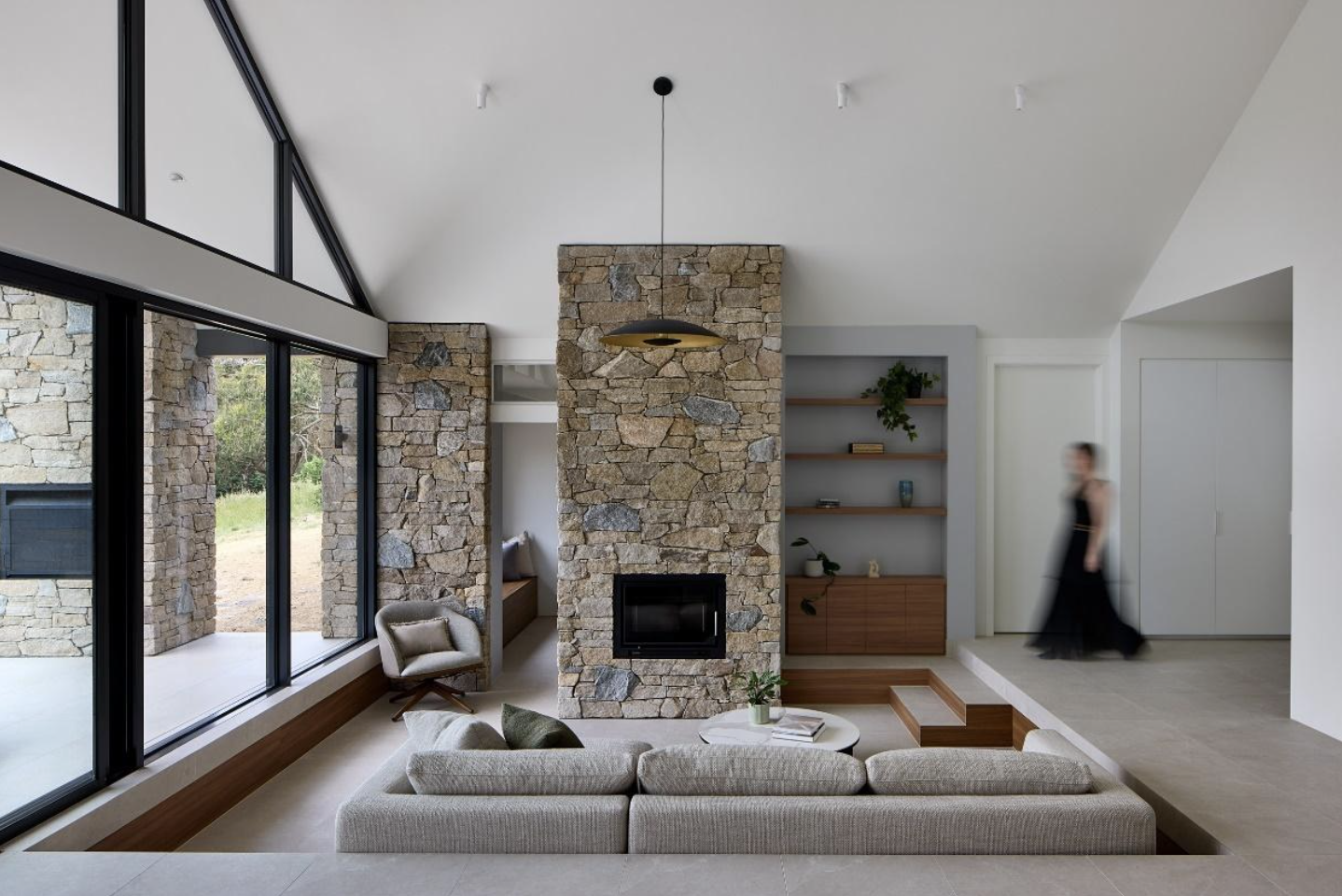
Beaconsfield Hillside Home contrasts concealed wall storage in circulation zones with feature display shelving in areas where you pause. The open shelving beside the stone fireplace celebrates everyday objects, while storage along the passageway remains discreet and functional. Photography by Tatjana Plitt
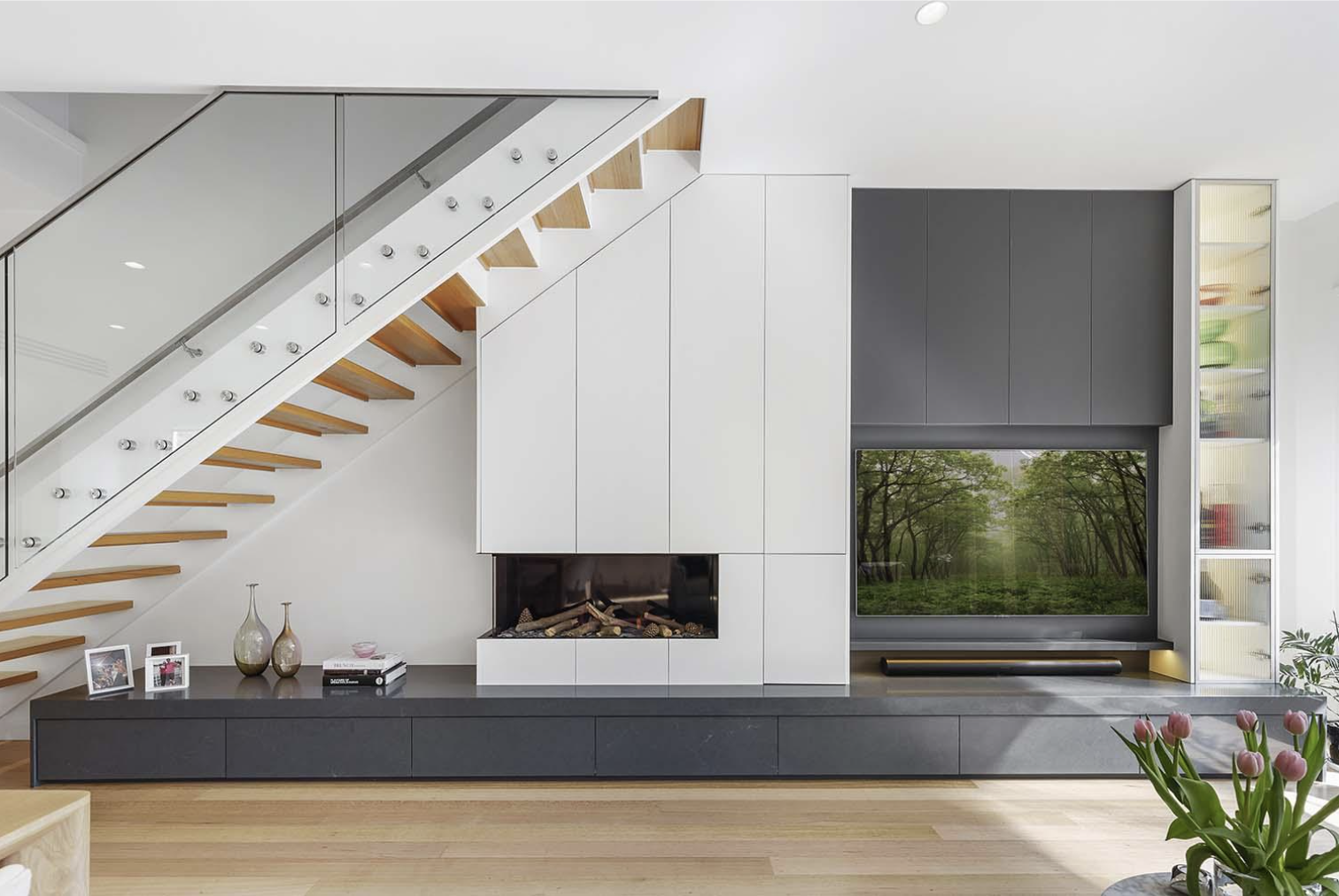
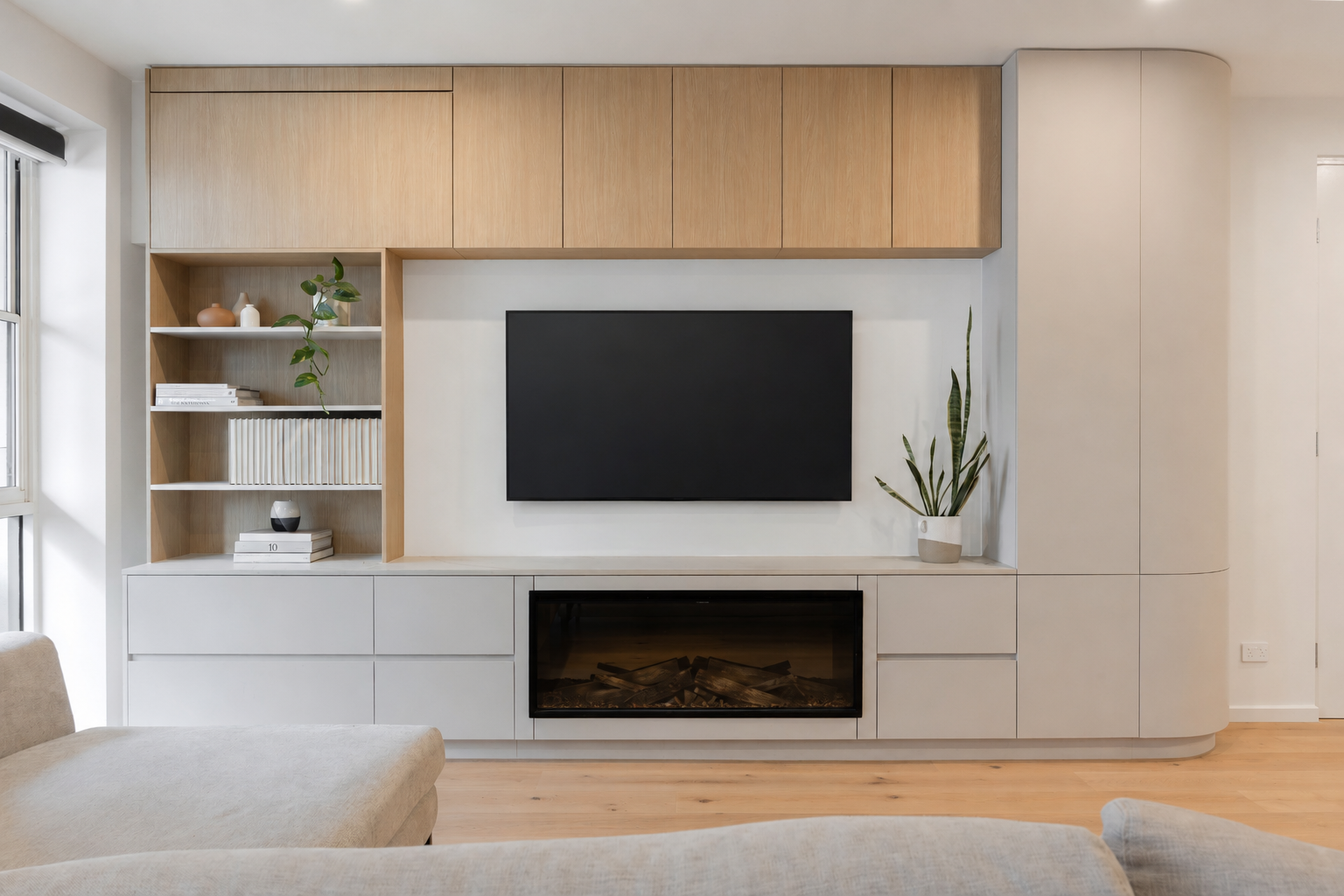
At Richmond Terrace, stone-clad drawers form a plinth beneath the integrated gas fireplace. A dark backing reduces the television’s black-mirror effect, while a reeded-glass bar cupboard adds texture beneath the existing staircase. Photography by Pbloc.
3. Let large areas of joinery recede
Wall-to-wall storage can be useful without feeling bulky. Matching painted joinery closely to the surrounding wall colour helps it read as part of the architecture rather than as a separate piece of furniture.
The Dulux and Laminex colour-match range can be a useful starting point when coordinating paint and laminate finishes.
At Richmond Terrace, storage, fireplace and television were resolved as one composition beneath the staircase. This made an awkward area work hard without adding another freestanding element to the room.
4. Question common storage defaults
More storage is not automatically better storage. These common approaches deserve closer testing:
Walk-in pantries and robes: They use floor area for circulation as well as storage. A well-designed reach-in cupboard can sometimes store more in less space.
Very high cupboards: Storage that requires a chair or ladder is inconvenient and may be unsafe. Reserve difficult-to-reach areas for genuinely infrequent items, if they are used at all.
Attic storage: Retrofitting roof-space storage can require structural work, safe access, insulation changes and protection from dust. The cost and inconvenience should be tested against other options.
Deep pantry shelves: Shelves deeper than about 400 mm above bench height make it difficult to see and reach items at the back. Drawers or pull-out fittings may be more practical.
5. Design around daily routines
Useful storage responds to small, repeated actions: where shoes come off, where keys are dropped, where school bags land and where the robot vacuum returns to charge.
In Never Too Small for Travancore, one joinery unit runs from the apartment entry to a home workspace. Hooks and drawers hold dog leads and coats, a bench creates a place for keys, cupboards contain books and bags, and the desk includes an electric monitor lift.
Each element has a clear purpose. That reduces the small frustrations that accumulate when a home works against its occupants.
6. Plan storage early
Storage works best when it is considered alongside the floor plan, furniture and services. Leaving it until late in the project can result in bulky cupboards, blocked circulation or freestanding furniture that never quite fits.
Early planning also allows practical requirements to be coordinated. Heavy cookware needs suitable drawers and runners. A router needs power and ventilation. A robot vacuum needs a charging point and enough clearance to dock.
Every cupboard adds cost, so the aim is not to fill every wall with joinery. It is to provide the right storage in the right place, designed around what will actually be kept there.
A calmer home through better planning
The best storage is rarely the feature people notice first. It supports the room, makes everyday routines easier and leaves space for the objects and activities that matter.
That outcome comes from understanding how you live before deciding how many cupboards to draw.
Planning a substantial renovation or custom home?
Our Home Masterplan Report helps you test the brief, priorities, site constraints and likely costs before committing to design.
Book a free 20-minute Clarity Call with Audrey to discuss the right first step for your project.