AI in Architecture: Useful Tool, Uncomfortable Questions
A useful tool with uncomfortable questions
Artificial intelligence is now part of our studio, mostly in small and practical ways. We use language models to help organise and analyse information, image tools to improve visual communication, and automations to reduce repetitive administrative work.
None of these tools designs a building for us. They can process information quickly, but they cannot take responsibility for the result. Architectural judgement still sits with the architect.
Where AI is genuinely useful
Architecture involves an enormous amount of information: planning schemes, building regulations, consultant reports, meeting records, contracts, correspondence and technical documentation. AI can help sort, summarise and cross-check some of that material.
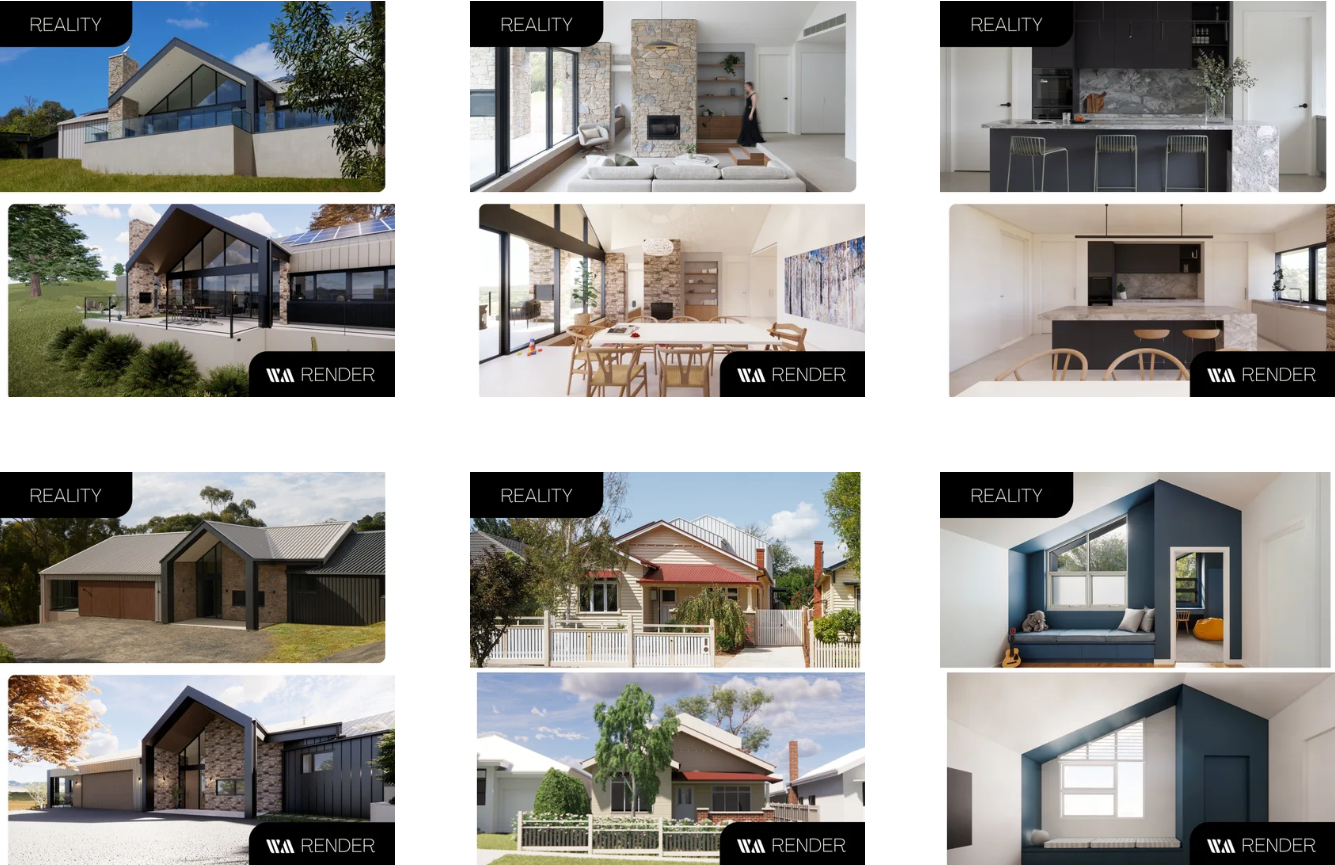
It can also help structure early written work, test the clarity of an argument, organise practice systems and improve images used to explain design ideas. We retain Enscape and conventional modelling tools because accurate spatial information still matters. AI-enhanced images are useful when they help clients understand an option and make a more confident decision, not simply because they look polished.
Some of these tasks would otherwise take hours. The value is not that AI replaces our thinking. It allows us to apply our judgement more efficiently to work that still needs a person to assess it.
The human verification problem
AI still makes mistakes. It can invent facts, miss context and present an incorrect answer with complete confidence. Every output requires human review, and important advice must be checked against the original source.
We also respect project-specific confidentiality, data-security and client requirements. We do not use AI where a client or project framework prohibits it, and we do not treat a public AI tool as an appropriate destination for confidential project information.
What happens to professional learning?
There is also a difficult question for the profession. Graduates have traditionally learned through modelling, drawing, rendering and documentation. Those tasks were sometimes slow, but they taught the logic of buildings and construction.
If automation reduces the amount of junior work required, practices will need to be more deliberate about training. Efficiency is not a sufficient achievement if the profession loses the pathway through which the next generation develops judgement.
Inspiration is not architecture
AI-generated images can help homeowners explore ideas and explain what they like. They can also create a false impression that a convincing image is the same as a resolved design.
A real building must respond to structure, planning controls, energy requirements, construction tolerances, materials, services and budget. An image can ignore all of those things and still look plausible. At present, AI is far better at visual inspiration and image enhancement than it is at producing accurate, buildable architecture.
The environmental cost
AI also creates an uncomfortable tension for practices concerned with sustainability. The data centres supporting these systems consume significant energy and water. The scale and source of that impact are not always transparent to the people using the tools.
That does not automatically mean the tools should be rejected, but it does mean convenience should not be confused with consequence-free use.

Responsible AI with Greenfleet
Greenfleet featured insights from Whisker Architecture in an article examining the environmental impact of artificial intelligence and the importance of responsible AI adoption. Audrey Whisker discusses how new technologies can improve efficiency while highlighting the need for businesses to consider the broader environmental consequences of the tools they choose to use. The article explores both the opportunities AI presents and the importance of reducing and offsetting its environmental footprint.
Using new tools within our values
Whisker Architecture is built around the idea of living, learning and working [in] our values. Three of those values are leaving the world better than we found it, remaining eternally curious, and choosing empathy over ego.
AI sits awkwardly within that framework. Curiosity encourages us to understand what the technology can do. Empathy asks us to consider the people whose work and careers it may change. Our environmental commitments require us to question the resources consumed by the systems we use.
We do not yet have complete answers. Our current position is to use AI selectively, disclose its role where that matters, measure whether it genuinely improves a workflow, and keep a person accountable for the final work.Our studio operates around the idea of living, learning, and working in our values. Some of those values are leaving the world better than we found it, remaining eternally curious, and choosing empathy over ego.
AI sits awkwardly inside that framework.
Curiosity encourages us to explore new tools and understand how they might improve our work. Empathy reminds us that the technology will reshape industries and careers in ways that affect real people. The desire to leave the world better forces us to question the environmental cost of the systems we are beginning to rely on.
At the moment, we do not have clear answers.
Perhaps this moment in technology is similar to the arrival of cars, computers, or the internet. Each changed the way society operates, bringing enormous benefits alongside consequences that were difficult to foresee at the time.
It may be that AI will follow a similar path.
Or it may be something different entirely.
For small practices like ours, the reality is that we operate within a competitive professional environment. Refusing to engage with emerging tools entirely may not be a viable option if it means slowly making our work less competitive.
So for now, we approach the technology with curiosity, caution, and a healthy amount of critical thinking.
Responsibility cannot be automated
Architecture has always been changed by tools, from hand drafting to CAD and from physical models to BIM. AI is another significant change, but better tools do not automatically produce better architecture.
The architect remains responsible for understanding the context, interpreting the constraints and making decisions that lead to a safe, buildable and meaningful place. AI may make parts of that work faster. It does not make the responsibility lighter.
The question is therefore not simply whether architects should use AI. It is whether we can use it without surrendering judgement, training, transparency or the values we claim to hold.

This image began as a phone photograph taken during a site visit and was enhanced with AI to provide clearer context. AI was used for presentation, not to alter the underlying architectural design.